Toy Horses

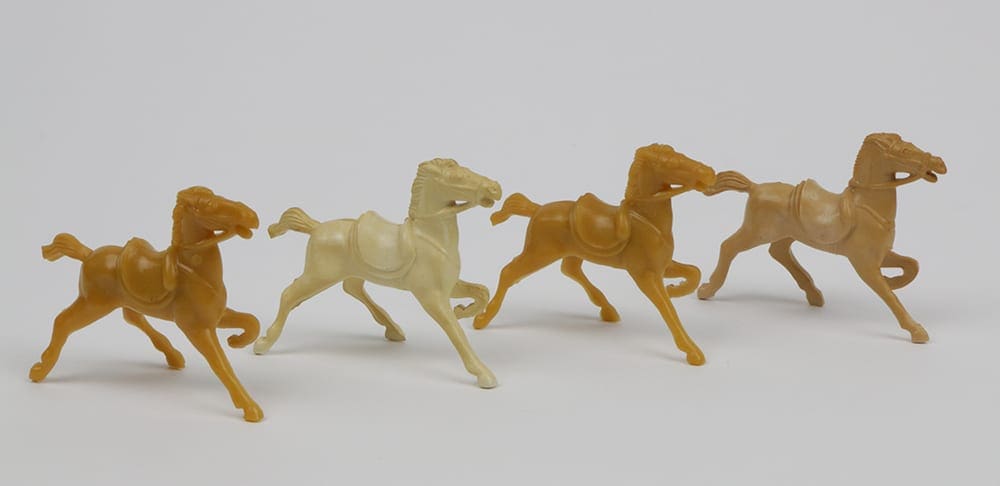
plastic toy horses, circa 1950s

Donated by Pat Vaughan

During the 1950s and 1960s, small plastic figurines like these horses were popular,  inexpensive toys. Four major manufacturers of these plastic playsets were Ajax, Archer, Beton/Bergen, and Lido. According to some sources, Beton/Berger made the first plastic horse figurine only to have their molds copied by the other manufacturers.

Of the four horses seen here, only one bears a manufacturers mark: Lido. Lido toy Company was formed in 1947 by Seymour and Effrem Arenstein, nephews of William Shaland, who owned one of the world’s largest large toy import companies. Lido produced a wide variety of toys until 1964 when it was sold to Bala Industries.

Donated by Pat Vaughan

During the 1950s and 1960s, small plastic figurines like these horses were popular,  inexpensive toys. Four major manufacturers of these plastic playsets were Ajax, Archer, Beton/Bergen, and Lido. According to some sources, Beton/Berger made the first plastic horse figurine only to have their molds copied by the other manufacturers.

Of the four horses seen here, only one bears a manufacturers mark: Lido. Lido toy Company was formed in 1947 by Seymour and Effrem Arenstein, nephews of William Shaland, who owned one of the world’s largest large toy import companies. Lido produced a wide variety of toys until 1964 when it was sold to Bala Industries.

Gilbert Family

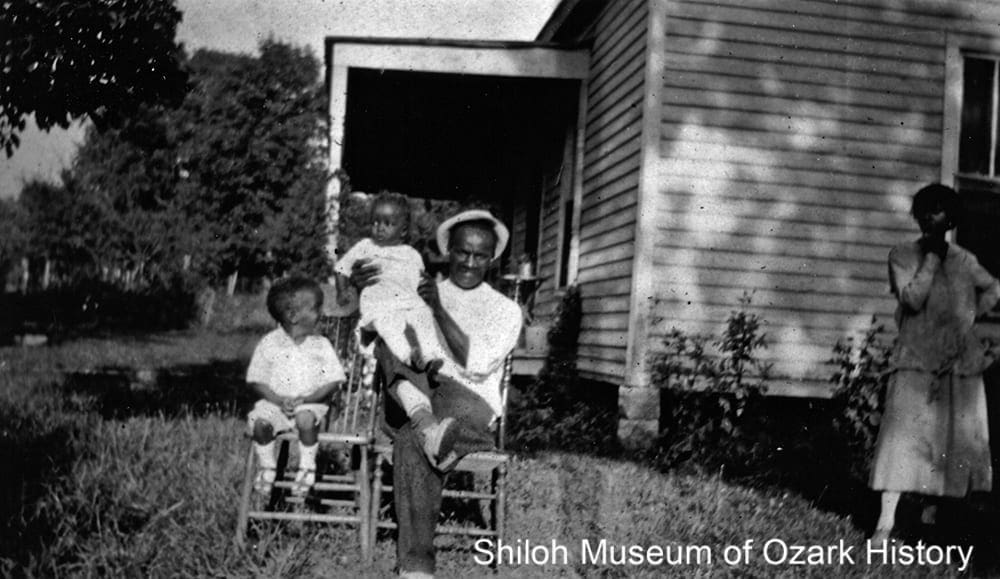
General Clayton Gilbert with his grandsons in Bentonville, circa 1918. James Gilbert Troutt, seated left; William Troutt, held by his grandfather. The woman at the right is unidentified.

Jo Hall Collection (S-96-2-128)

General Clayton Gilbert with his grandsons in Bentonville, circa 1918. James Gilbert Troutt, seated left; William Troutt, held by his grandfather. The woman at the right is unidentified. 

Jo Hall Collection (S-96-2-128)

Parthenon

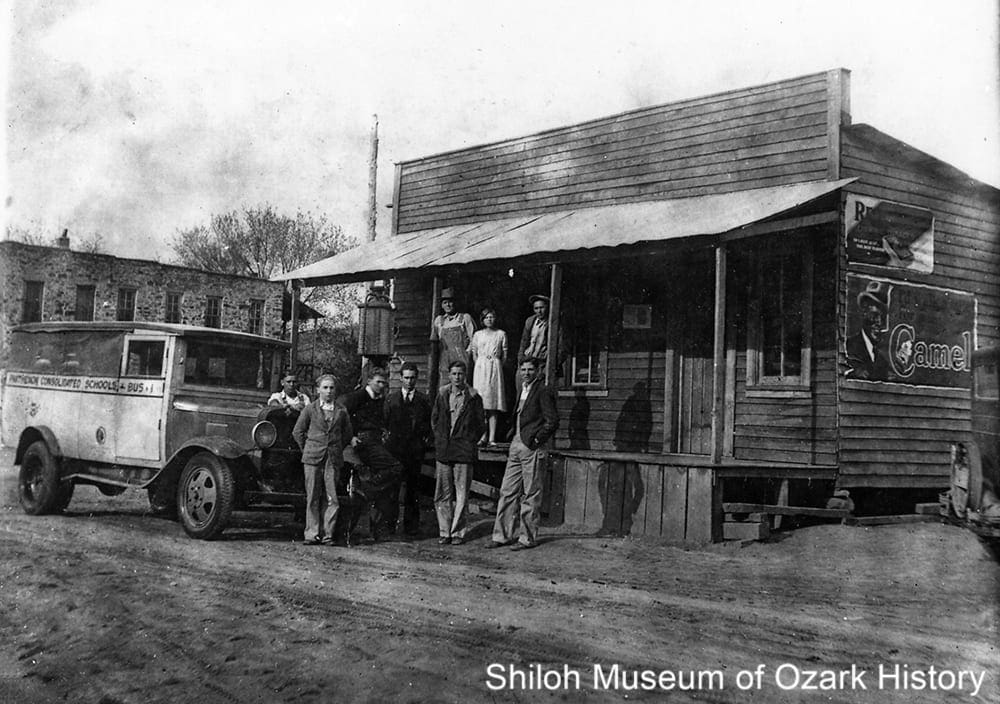
Parthenon (Newton County), circa 1929. The group stands next to a school bus for the Parthenon Consolidate School District. Elmer Casey, who taught at Parthenon, is the man wearing a suit and tie, standing in the center of the group.

Elmer Casey Collection (S-83-115-16)

Parthenon (Newton County), circa 1929. The group stands next to a school bus for the Parthenon Consolidated School District. Elmer Casey, who taught at Parthenon, is the man wearing a suit and tie, standing in the center of the group.

Elmer Casey Collection (S-83-115-16)

Swanky Swigs

Donated by Susan and Orville Hall Jr.

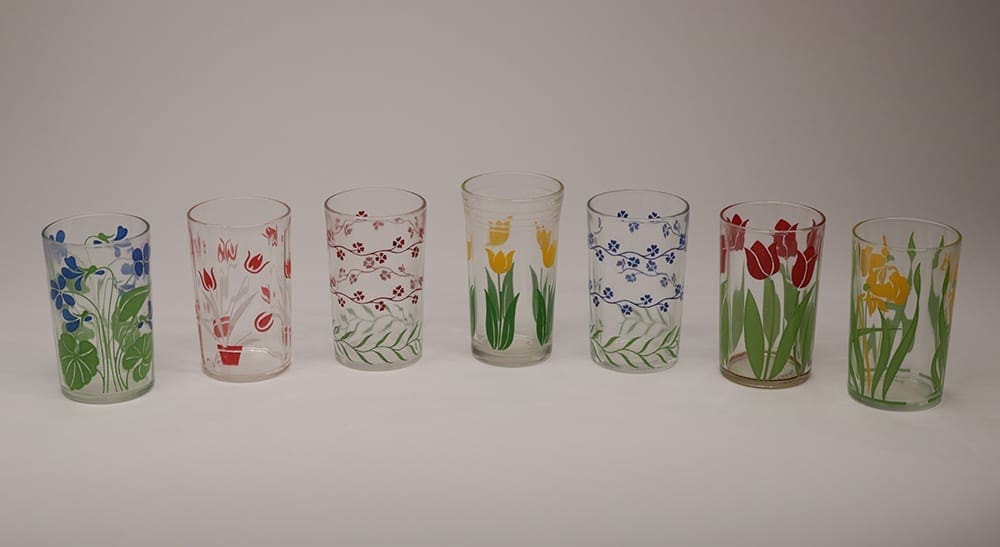
Swanky SwigsThese small beverage glasses, popularly known as “Swanky Swigs,” belonged to the Orville and Janie Hall family of Fayetteville. The glasses seen here date from the 1930s through the 1950s. 

The term “Swanky Swig” was coined by Kraft Foods. In 1933 Kraft began offering their processed cheese spreads in reusable glass containers they called Swanky Swigs. It was a marketing strategy to encourage housewives to purchase Kraft’s products during the Great Depression, when money was tight. Once the jars were empty, they could be washed out and used as beverage glasses. The glass jars were produced by Hazel Atlas Glass Co. The first Swanky Swigs were hand painted. 

More than eighteen different Swanky Swig designs were produced from the 1930s into the 1970s, including stars, solid color bands, animals, and some of the floral patterns seen here. During their heyday, Swanky Swigs were produced for markets in the United States, Canada, and Australia. The popularity of Swanky Swigs led other food companies to produce their own version of a decorated reusable glass container, but among glass collectors, the term “Swanky Swig” is used only when referring to glasses made by Kraft. 

In 1974, Fayetteville’s Safeway grocery store advertised Kraft cheese spreads in Swanky Swigs: olive, pimento, olive-pimento, and pineapple cheese spreads were 49 cents each; cheese and bacon, and Old English flavored spreads were 55 cents each (Northwest Arkansas Times, November 24, 1974).

Donated by Susan and Orville Hall Jr.

These small beverage glasses, popularly known as “Swanky Swigs,” belonged to the Orville and Janie Hall family of Fayetteville. The glasses seen here date from the 1930s through the 1950s. 

The term “Swanky Swig” was coined by Kraft Foods. In 1933 Kraft began offering their processed cheese spreads in reusable glass containers they called Swanky Swigs. It was a marketing strategy to encourage housewives to purchase Kraft’s products during the Great Depression, when money was tight. Once the jars were empty, they could be washed out and used as beverage glasses. The glass jars were produced by Hazel Atlas Glass Co. The first Swanky Swigs were hand painted. 

More than eighteen different Swanky Swig designs were produced from the 1930s into the 1970s, including stars, solid color bands, animals, and some of the floral patterns seen here. During their heyday, Swanky Swigs were produced for markets in the United States, Canada, and Australia. The popularity of Swanky Swigs led other food companies to produce their own version of a decorated reusable glass container, but among glass collectors, the term “Swanky Swig” is used only when referring to glasses made by Kraft. 

In 1974, Fayetteville’s Safeway grocery store advertised Kraft cheese spreads in Swanky Swigs: olive, pimento, olive-pimento, and pineapple cheese spreads were 49 cents each; cheese and bacon, and Old English flavored spreads were 55 cents each (Northwest Arkansas Times, November 24, 1974).

Telling Ed’s Story

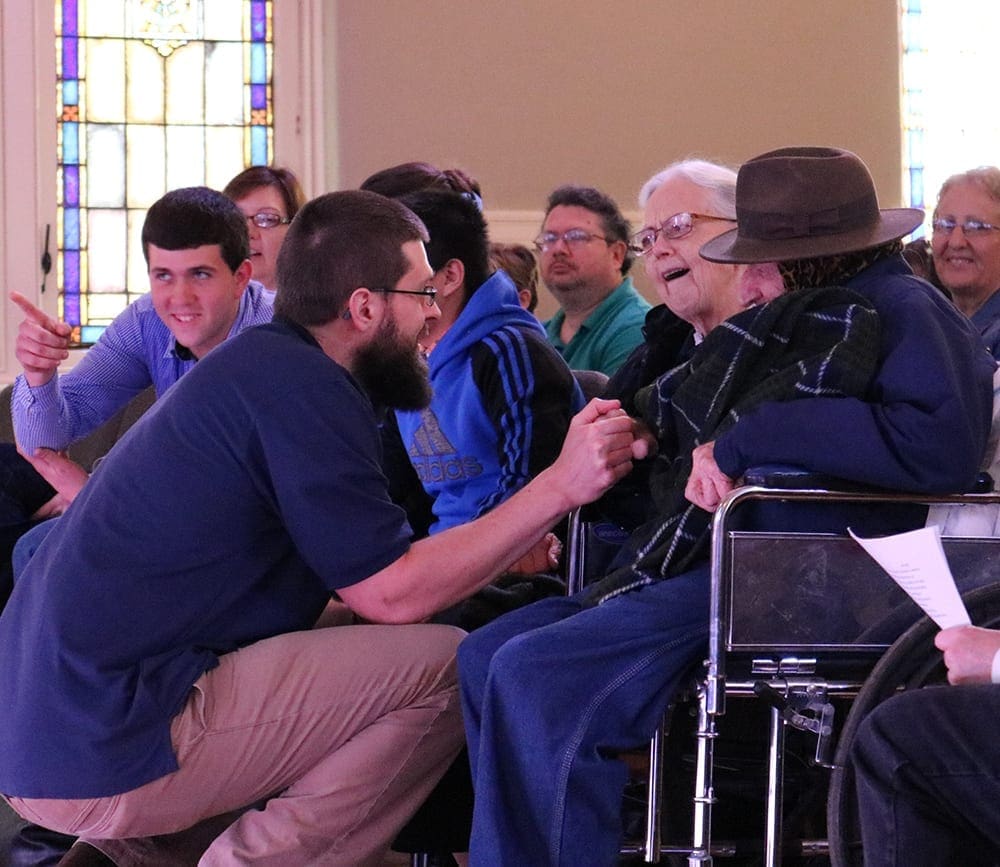
Aaron Loehndorf with Ed Stilley, March 2019.

Shiloh Museum collections and education specialist Aaron Loehndorf greets Ed Stilley at the Instruments of Faith exhibit reception, March 30, 2019.

There is a saying, “all good things must come to an end.” On January 13,2020, our Instruments of Faith exhibit on the life and work of folk instrument maker Ed Stilley will close. For me, it was truly a blessing to curate the exhibit, and it will be bittersweet as I take it down.

Early in the exhibit creation process, I was fortunate enough to meet folk musicians Kelly and Donna Mulhollan, friends of the Stilley family. The assistance and support from Kelly and Donna made the exhibit possible, and they made the work enjoyable. Kelly and Donna introduced me to Ed Stilley and his wife, Eliza.  Meeting the Stilleys is still an awe-inspiring moment for me. They are some of the nicest people I have ever met as they welcomed me into their home. I have never met anyone like Ed—forceful yet quiet, reserved yet expressive. The fact that I had the chance to spend time with him during the course of the exhibit was the highlight of the entire process.

Museum exhibits frequently cover topics from the past or about individuals that are no longer with us. Telling someone else’s story, especially while they’re still alive, can be daunting. I had some concerns about how the exhibit would be received, especially since at the heart of Ed Stilley’s life story is his response to a vision he said he received from God. It’s a very personal story. I wanted to present it to the public in a meaningful, respectful way. Overall, I could not be happier with how Instruments of Faith turned out and the rave reviews we’ve received from visitors. There might be one or two minor tweaks—things I would have done differently—but all in all, I am happy with it.

Ed Stilley and Kelly Mulhollan

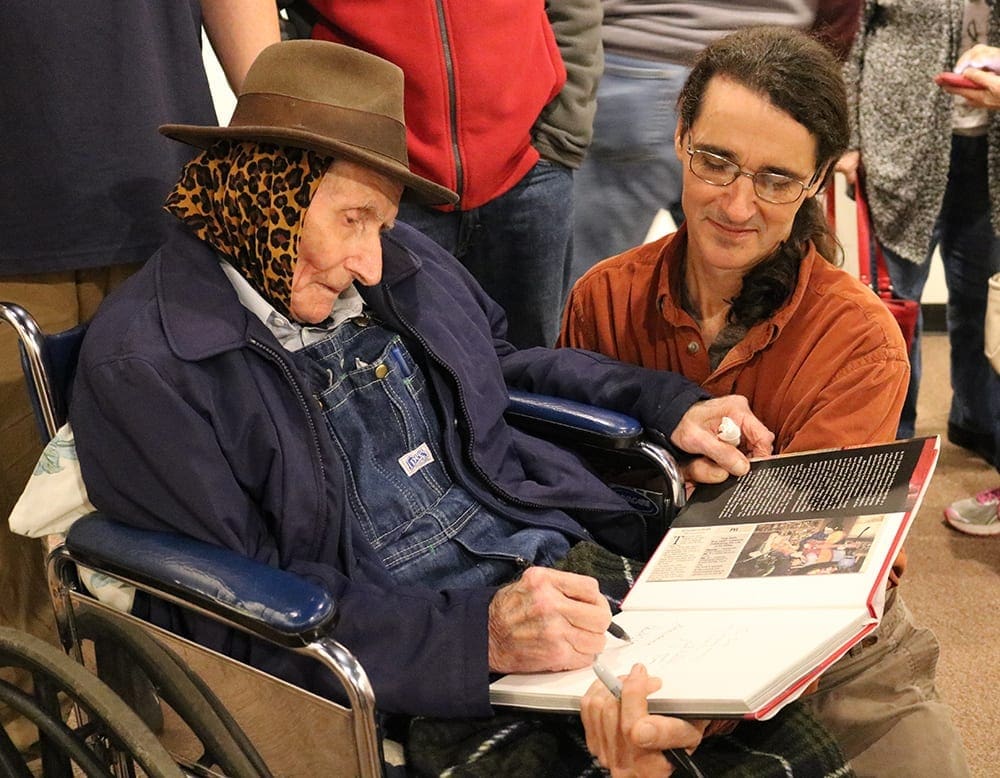
Ed Stilley signs a copy of his biography, True Faith, True Light, as author Kelly Mulhollan looks on. Stilley and Mulhollan were attending the museum’s Instrument of Faith exhibit reception on March 30, 2019.

While Ed Stilley stopped making instruments a few years ago due to poor health, he and his family joyfully attended the Instruments of Faith exhibit opening on March 30, 2019. Ed sang a hymn for the audience and also signed copies of his biography, True Faith, True Light, written by Kelly Mulhollan and published by the University of Arkansas Press. I think for all those in attendance, being in the same room with Ed Stilley, getting the chance to shake his hand, was a very moving experience. I believe the exhibit reception was Ed’s last public appearance. He passed away on June 12, 2019.

Soon the Ed Stilley instruments will come down, the tools in his replica tool shed will be put away, and the life-size photo of Rose the mule will find a new home. I wish I had words to do justice about what this experience has meant to me, but I am at a loss. It was truly a life changing process to be a part of, and I will carry the memories and experiences for the rest of my life. Thank you once again to all the individuals who loaned their Stilley instruments for the exhibit. Another thank you to all who came to see the exhibit and took time to share their impressions with us. (It is always nice to hear positive comments from the people that the museum serves.) Finally, a special thank you to Kelly and Donna Mulhollan, and to the entire Stilley family for entrusting me with Ed’s story. I hope you feel that I did it justice.


Aaron Loehndorf is the Shiloh Museum’s collections and education specialist.

Wadsworth Building

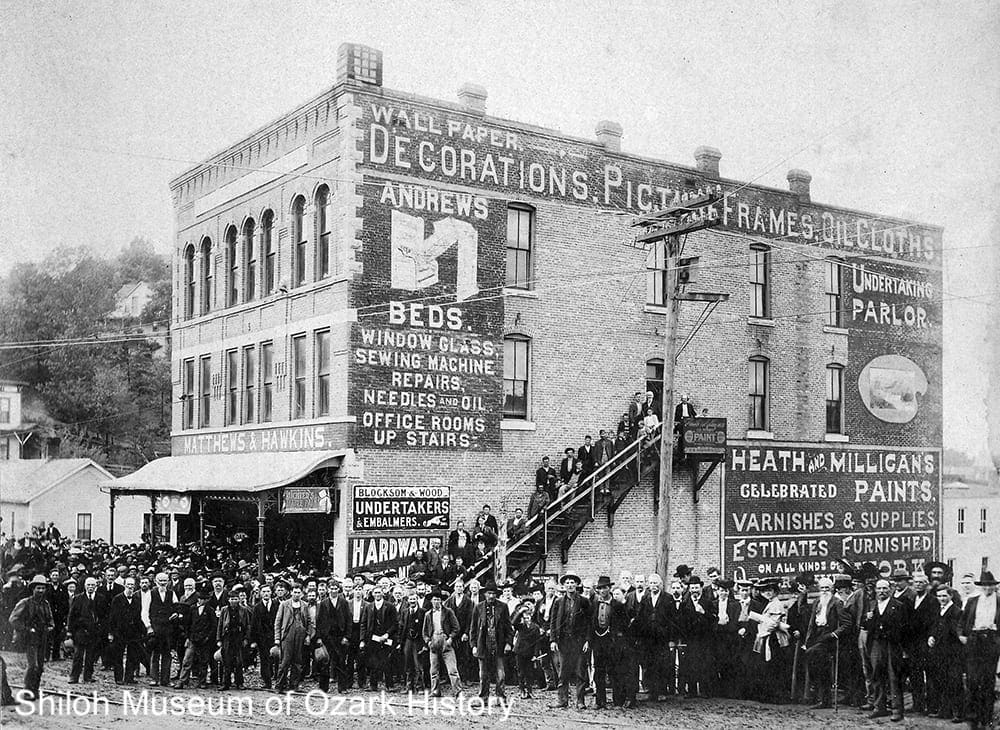
Wadsworth Building, corner of Spring and Mountain streets, Eureka Springs, circa 1900. The occasion for this gathering of well-dressed folks is unknown. At the time of the photo, the building was occupied by Matthews and Hawkins Hardware Company. By 1905, that business was known as A. N. Matthews and Son. In 2019, the Wadsworth building is home to Fain Herbacy and White River Tobacco.

Virginia Vafakos Collection (S-2019-38-1)

Wadsworth Building, corner of Spring and Mountain streets, Eureka Springs, circa 1900. The occasion for this gathering of well-dressed folks is unknown. At the time of the photo, the building was occupied by Matthews and Hawkins Hardware Company. By 1905, that business was known as A. N. Matthews and Son. In 2019, the Wadsworth building is home to Fain Herbacy and White River Tobacco.

Virginia Vafakos Collection (S-2019-38-1)

Sarah Morton

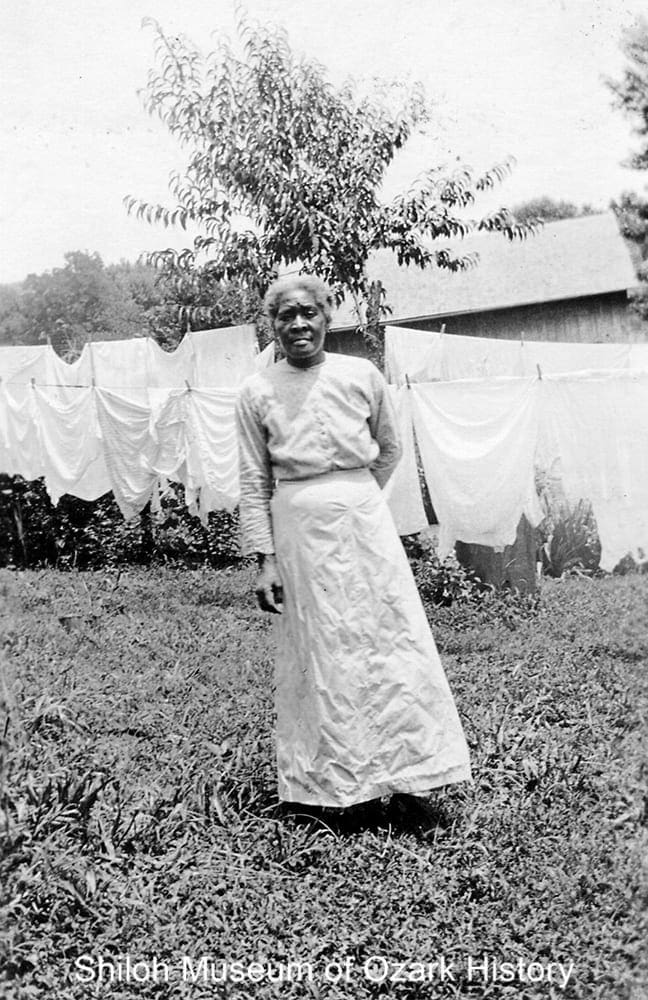
Sarah Morton, Fayetteville, circa 1910. According to the 1910 census, Sarah Morton was born in 1855 in Tennessee. Her occupation in 1910 is listed as “washing” for “private families.” Her husband, Alfred Morton, also a Tennessee native, was born in 1850. His occupation is listed as “odd jobs.” Also in the Martin household in 1910 was their 14-year-old grandson, Leslie Howard.

Washington County Historical Society Collection (P-4602)

Sarah Morton, Fayetteville, circa 1910. According to the 1910 census, Sarah Morton was born in 1855 in Tennessee. Her occupation in 1910 is listed as “washing” for “private families.” Her husband, Alfred Morton, also a Tennessee native, was born in 1850. His occupation is listed as “odd jobs.” Also in the Martin household in 1910 was their 14-year-old grandson, Leslie Howard.

Washington County Historical Society Collection (P-4602)

Bear Brand Teddy Bear

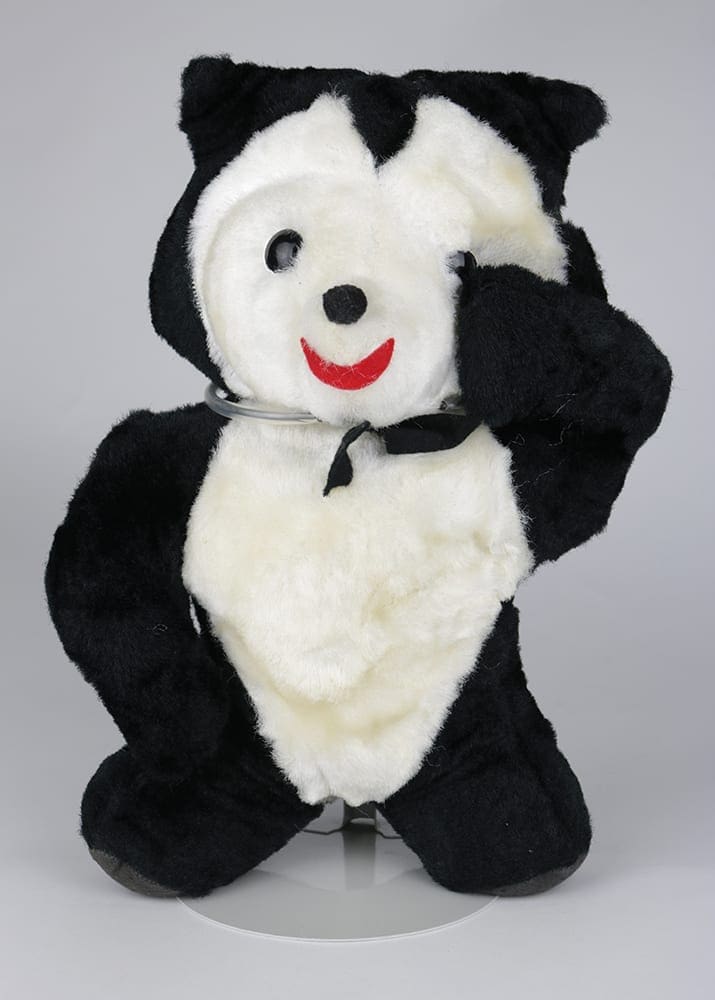
Bear Brand Hosiery teddy bear, circa 1970sDonated by David Quin

This teddy bear was a marketing item for Bear Brand Hosiery Company. Founded in Chicago in 1893 as Paramount Knitting Company, the name was changed to Bear Brand in 1922. At first the company specialized in factory-made fleece-lined men’s socks, later branching out to include stockings for women and casual socks for the whole family.

In 1951, Bear Brand Hosiery opened a factory in south Fayetteville (the present-day location of the Arkansas Research and Technology Park on Cato Springs Road). According to an article in the Northwest Arkansas Times (April 10, 1951), the new plant boasted 280 knitting machines, “hundreds of windows which afford proper lighting,” a special ventilation system, and an employee cafeteria. The knitting machines were to be run on a double shift, yielding an output of 2500 pairs of socks per day. At its full operation, Bear Brand anticipated putting 150 local people to work. 

Bear Brand also opened a plant in Siloam Springs in 1951, followed by factories in Bentonville in 1962 and Rogers in 1968. The 1960s saw Bear Brand’s focus shift to production of women’s pantyhose, making Northwest Arkansas a leader in the pantyhose industry. In 1970, Fayetteville hosted Bear Brand’s annual national sales meeting. Held at the Holiday Inn, the convention featured a “psychadelic, choreographed fashion show” which stressed the “hosiery needs of the liberated woman.” New hosiery styles shown included “those for the woman with a generous figure, thigh-high styles for future fashion in longuette (mid-length) dresses, an over-the-calf style for wearing with pants suits, styles for the young or early teen petite figure, and a nude pantyhose with only the waistband unconcealed.” (Northwest Arkansas Times, June 3, 1970)

The Siloam Springs Bear Brand factory closed in 1975 and the Rogers plant in 1976, with the Bentonville and Fayetteville operations soon to follow.

Donated by David Quin

This teddy bear was a marketing item for Bear Brand Hosiery Company. Founded in Chicago in 1893 as Paramount Knitting Company, the name was changed to Bear Brand in 1922. At first the company specialized in factory-made fleece-lined men’s socks, later branching out to include stockings for women and casual socks for the whole family.

In 1951, Bear Brand Hosiery opened a factory in south Fayetteville (the present-day location of the Arkansas Research and Technology Park on Cato Springs Road). According to an article in the Northwest Arkansas Times (April 10, 1951), the new plant boasted 280 knitting machines, “hundreds of windows which afford proper lighting,” a special ventilation system, and an employee cafeteria. The knitting machines were to be run on a double shift, yielding an output of 2500 pairs of socks per day. At its full operation, Bear Brand anticipated putting 150 local people to work. 

Bear Brand also opened a plant in Siloam Springs in 1951, followed by factories in Bentonville in 1962 and Rogers in 1968. The 1960s saw Bear Brand’s focus shift to production of women’s pantyhose, making Northwest Arkansas a leader in the pantyhose industry. In 1970, Fayetteville hosted Bear Brand’s annual national sales meeting. Held at the Holiday Inn, the convention featured a “psychadelic, choreographed fashion show” which stressed the “hosiery needs of the liberated woman.” New hosiery styles shown included “those for the woman with a generous figure, thigh-high styles for future fashion in longuette (mid-length) dresses, an over-the-calf style for wearing with pants suits, styles for the young or early teen petite figure, and a nude pantyhose with only the waistband unconcealed.” (Northwest Arkansas Times, June 3, 1970)

The Siloam Springs Bear Brand factory closed in 1975 and the Rogers plant in 1976, with the Bentonville and Fayetteville operations soon to follow.

Vance Randolph Slept Here

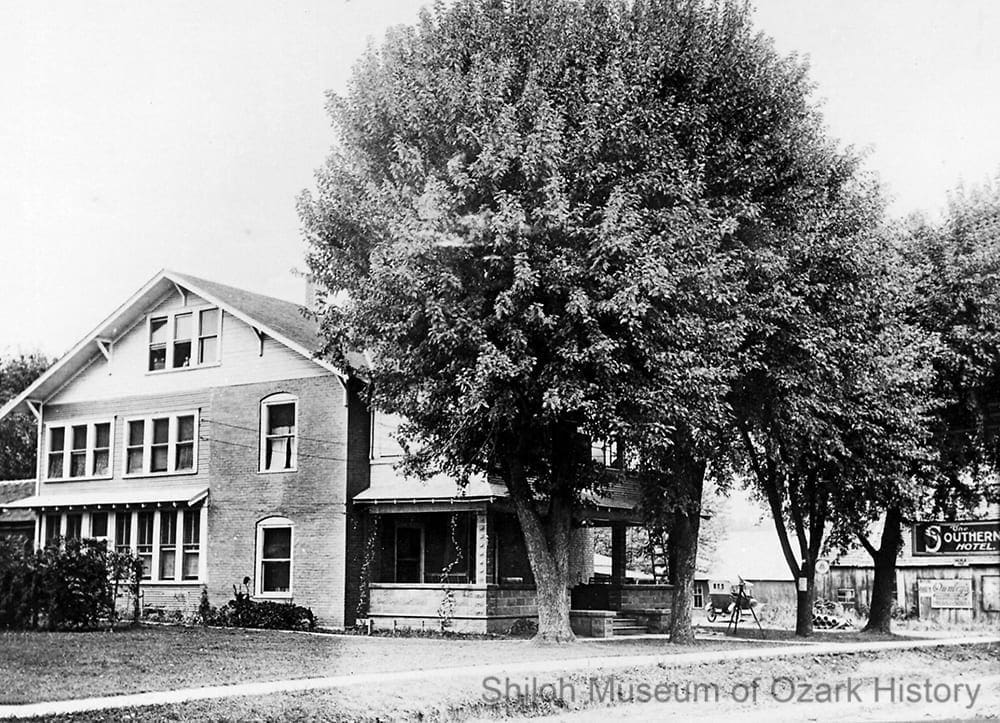
Southern Hotel, early 1900s, Springdale. Arkansas

Southern Hotel on the southeast corner of Holcomb and Meadow in downtown Springdale, early 1900s.

Note: Vance Randolph (1892–1980) was a folklorist whose writings on the traditional Ozark culture were published from the 1920s through the 1970s in collections such as Ozark Folksongs, Ozark Superstitions, and Down in the Holler: A Gallery of Ozark Folk Speech, among others. 

In 1968 the Shiloh Museum was given a guest register from Springdale’s Southern Hotel. Joe Robinson, a Springdale businessman and a founding board member of the Shiloh Museum, recovered the ledger after the old hotel building was torn down as part of Springdale’s urban renewal program. (Urban renewal was a federal program that ran from 1950s to the 1970s that sought to renovate towns and cities nationwide by removing rundown buildings and homes to make way for new development.)

Flora and Henry B. Rice opened the Southern Hotel in 1920 in a converted house on the southeast corner of Holcomb Street and Meadow Avenue. Their customers came from as far away as New York and as close as Springdale (the locals were mostly extended-stay boarders.) The hotel’s claim to fame was Flora Rice’s delectable home-style meals. In 1935 the Rices moved to another, smaller, converted house on the corner Main Street and Grove Avenue where they ran the Southern until the early 1960s. The building on Holcomb became the Alvin Hotel, which operated until 1966. It also was torn down during urban renewal.
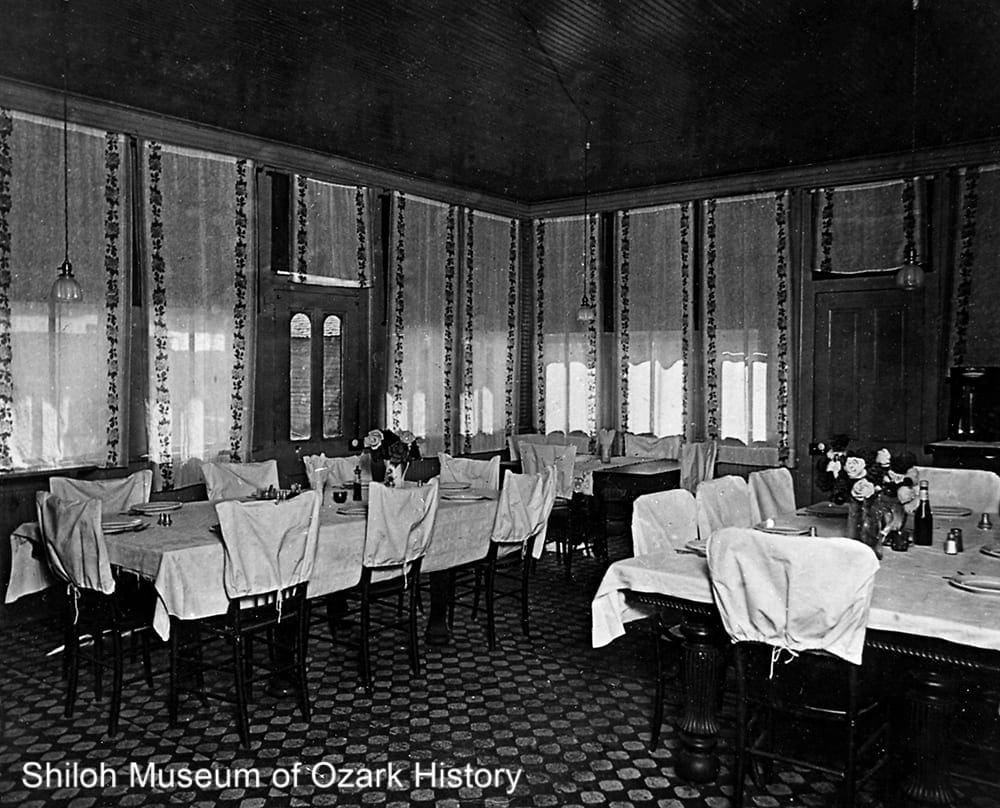
Southern Hotel dining room, early 1900s.

Southern Hotel dining room, early 1900s.

The Southern Hotel register is a big item, about the size of a cement block and just as heavy (it seems). In my thirty-five years as collections manager I have had to build it a custom storage box and move it a few times for re-shelving purposes. From time to time I would turn its pages and think how interesting it might be make a list of all the names to see who stopped at the hotel back in the day. Other projects kept it on the back burner until this year when Michele Gibson, our front desk receptionist, volunteered to take on the task. So in between her front desk and gift shop duties she has been transcribing eleven years (from 1920 to 1931) of Southern Hotel guest signatures. That’s 4015 days, multiple listings per day, and often with challenging handwriting. We’re at over 14,000 names and counting.

On the very first day of the project, on the very first page of the ledger—May 4, 1920—we had our first surprise. There on the page was “Vance Randolph, Kansas City.” What!? Was this the noted Ozark folklorist Vance Randolph? To confirm that it might be him, Michele looked for his autograph online to compare the signature. It was not his signature. But then we noticed that the hand that wrote “Vance Randolph” had written the name above it on the register, “N. R. Tripp,” also from Kansas City. And they were both booked for Room 9. We theorized that Tripp and Randolph were traveling together.

But how to confirm this? The first place to look was in Robert Cochran’s definitive biography, Vance Randolph, An Ozark Life, which lays out Randolph’s life in great detail. Randolph, born in 1892, was raised in Pittsburg, Kansas. By 1920 he had completed most of his education with a B.A. in biology and M.A. in psychology. He applied to do graduate studies on Ozark Mountain people under pioneer anthropologist Franz Boas at Columbia, but those plans fell apart when Randolph couldn’t get Boas interested in the project.
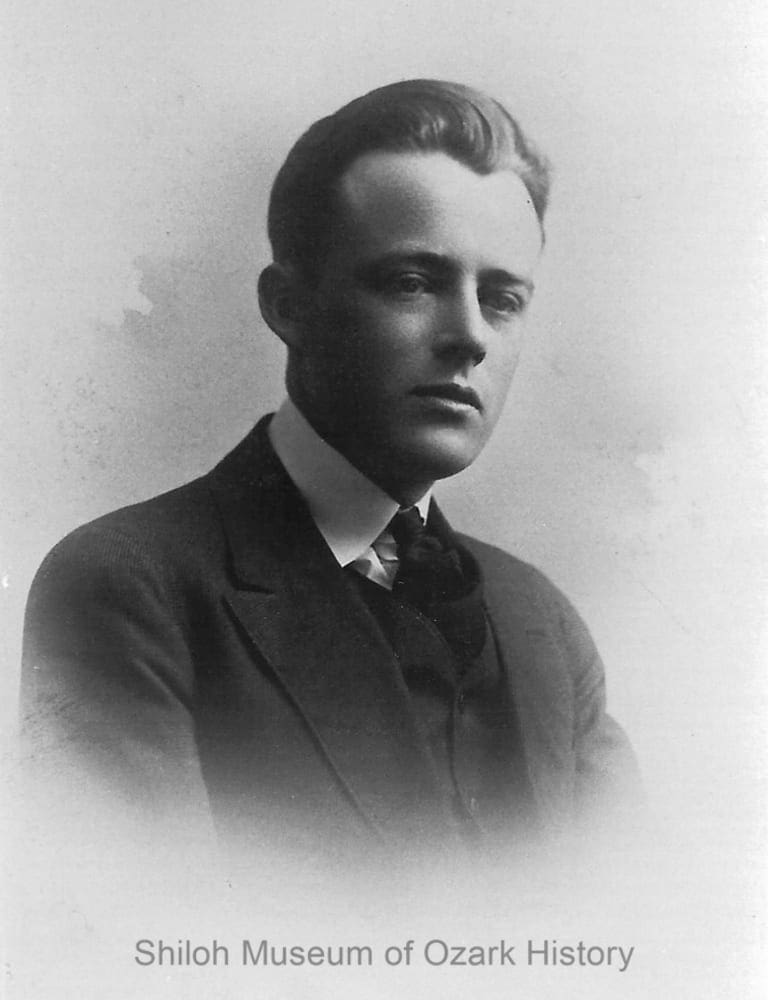
Vance Randolph, 1916

Vance Randolph when he was a high school biology teacher in Pittsburg, Kansas, 1916.

In the years leading up to 1920 Randolph had dabbled in Socialist politics, briefly worked as an insurance salesman and high school teacher, served in the Army during WWI, and traveled the country. He had also started to write, some of his first work appearing signed and unsigned in pre-war editions of Appeal to Reason, a Socialist newspaper published in Pittsburg, Kansas. Cochran writes, “By late spring, 1920 Randolph seems to have returned to Pittsburg from his East Coast wanderings—he was apparently in St. Louis on February 23—and evidently spent much of his time over in the Ozarks. There are song citations from May, June, and July, a three-month break in the late summer and fall, and then more citations for November and December.”

So now I knew roughly about Vance Randolph’s activities in 1920, but what about N. R. Tripp? Turning back to Cochran’s book I checked the index and there I found an entry for one Newell R. Tripp. But wait a minute; it was listed in quotes as one of Vance Randolph’s pseudonyms. A quick check in the book revealed that it was a nom de plume that Randolph used in the mid-1920s. Randolph and Tripp visited Springdale in 1920.

It was time to track down the real Newell R. Tripp.

Thanks to Ancestry.com, finding Newell Richard Tripp didn’t take long. The first thing that popped up was the 1920 census showing him living in Joplin, Missouri, married, and working as a traveling salesman for a wholesale drug company. A few more clicks and I had found his connection to Vance. Tripp was born in Kansas in 1889 and spent some years in the Kansas cities of Beloit and Lawrence. From 1914 to 1917 he lived in Pittsburg, Kansas, like Randolph. And, like Randolph, he was drafted into service in July 1917.

So now I had Tripp and Randolph in the same town at the same time and that might have been enough, with so much time passed, to assume some kind of an acquaintance between the two. But then, while searching through issues of the Pittsburg Daily Headlight at Newspapers.com, I found two articles that revealed their connection. First was an article from 1917 regarding Tripp’s deferment from service (he had a dependent wife and child) that also detailed his life in Pittsburg before he was drafted. Besides his job at a local pharmacy and as a traveling salesman, turns out Tripp, like Randolph, was active in the local Socialist party. In fact, he ran for justice of the peace on the Socialist ticket. Surely they had crossed paths there. One more article finally proved their acquaintance. In the “Local Mention” column of the June 5, 1916, issue of the Headlight the following notice appeared:
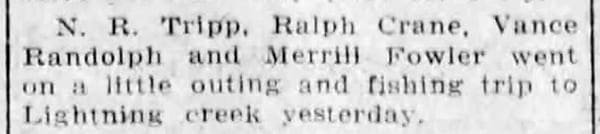
Pittsburg Daily Headlight, June 6, 1916.

So Randolph and Tripp were buddies in Pittsburg before the war and afterwards. In 1920, although they lived in different states, they met up again for a series of trips to Springdale. But for what purpose? Was Tripp, the traveling salesman, out on sales calls with Randolph tagging along? Who knows? They stopped at the Southern Hotel on May 4, August 17 and 18, and September 28. Issues of the Springdale News around those dates had nothing to report. But then, a traveling salesman on his rounds would not necessarily be newsworthy. And as regards Vance Randolph, it would be another 10-20 years before he would gain recognition as folklorist of the Ozarks.

Cochran wrote that Vance Randolph considered 1920 a watershed year in his life, the one that set him on the path for his life’s work. In December 1920 Randolph bought a cabin in Pineville, Missouri. It became his base for many years as he began to collect and write about Ozark songs, dialect, and culture. His first published work on Ozarks culture, “A Word-list from the Ozarks,” appeared in Dialect Notes of the American Dialect Society in 1927.

In his work as a freelance writer on a myriad of non-Ozark topics, Vance Randolph sometimes used pseudonyms. Under the name “Newell R. Tripp,” Randolph authored The ABC of Chemistry for Vanguard Press in 1924 and Behaviorism: The Newest Psychology (circa 1925) for the Little Blue Book paperback series published by E. Haldeman-Julius. (And just to “put a bow on it,” Haldeman-Julius was also a Socialist Party buddy of Randolph.) I wonder if the real Newell R. Tripp ever knew that his name was used as a pen name by his friend, Vance Randolph?

Vance Randolph returned to Springdale at least one more time in his career. In February 1942 he came to town to collect and record folksongs from Maggie Glover Morgan, which would be published in his book Ozark Folksongs in 1946.


Carolyn Reno is the Shiloh Museum’s assistant director and collections manager.

World War I Poster

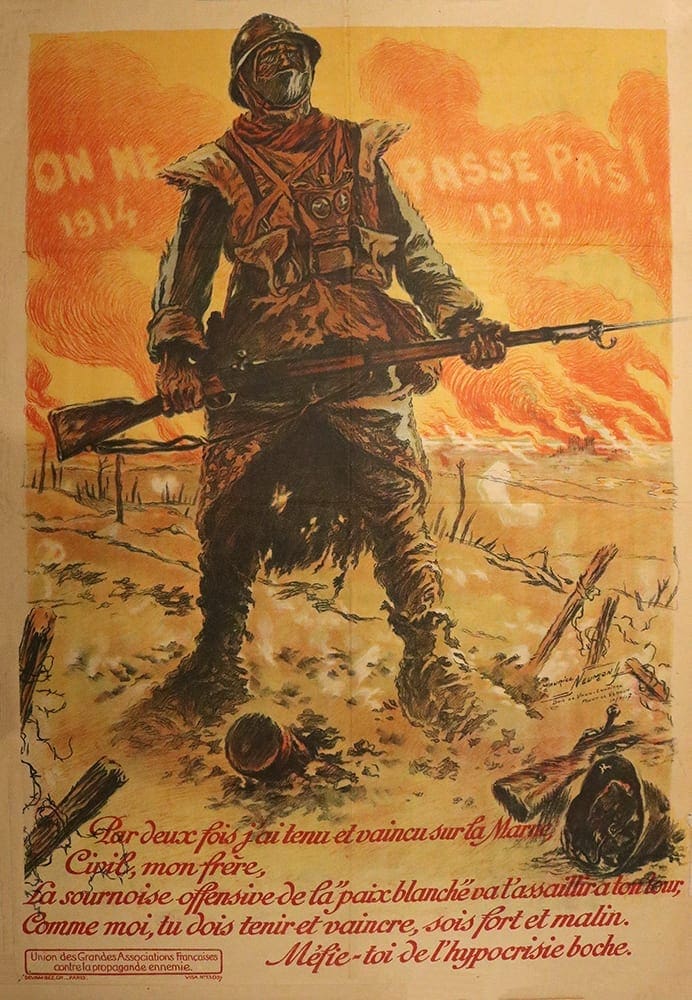
World War I poster from FranceDonated by Lonnie Walker

The 1918 World War I poster from France was discovered in a trunk in an old hotel in Eureka Springs (Carroll County). The trunk, which contained posters, army manuals, maps, and letters, had belonged to 1st Lt. John Harold Lawson (1897-1966), who served with the Illinois 123rd Field Artillery 33rd Division during World War I. Following the war,Lawson returned to his hometown of Kewanee, Illinois, where he lived with his mother while attending college. From 1938 to 1960 he and his wife, Leora, lived in Topeka, Kansas, where he worked as an accountant for Kansas Power and Light Company. Both John and Leora Lawson are buried in the Eureka Springs Cemetery.

The “Union of French Associations Against Enemy Propaganda” commissioned French artist Maurice Neumont to create the artwork. Neumont depicts a soldier wearing a gas mask standing on a war-torn field. Behind him in a cloud of smoke is the phrase, “They Shall Not Pass! 1914–1918.” At the bottom of the poster is a message from the soldier, who is speaking to French civilians. It reads,

Twice I have held and won on the Marne,
Civilian, my brother,
The underhanded offensive of the “white peace” will assault you in your turn,
Like me, you must hold and win, be strong and shrewd,
Beware of German hypocrisy.

The soldier refers to two battles that were waged along the Marne River in France; both were Allied victories over the German armies. “White Peace” is a term used to describe a settlement where nations agree to cease fighting, with no annexations or reparations exchanged. The implyed message of the poster is that, for France, true peace can only come with victory.

Donated by Lonnie Walker

The 1918 World War I poster from France was discovered in a trunk in an old hotel in Eureka Springs (Carroll County). The trunk, which contained posters, army manuals, maps, and letters, had belonged to 1st Lt. John Harold Lawson (1897-1966), who served with the Illinois 123rd Field Artillery 33rd Division during World War I. Following the war,Lawson returned to his hometown of Kewanee, Illinois, where he lived with his mother while attending college. From 1938 to 1960 he and his wife, Leora, lived in Topeka, Kansas, where he worked as an accountant for Kansas Power and Light Company. Both John and Leora Lawson are buried in the Eureka Springs Cemetery.

The “Union of French Associations Against Enemy Propaganda” commissioned French artist Maurice Neumont to create the artwork. Neumont depicts a soldier wearing a gas mask standing on a war-torn field. Behind him in a cloud of smoke is the phrase, “They Shall Not Pass! 1914–1918.” At the bottom of the poster is a message from the soldier, who is speaking to French civilians. It reads,

Twice I have held and won on the Marne,
Civilian, my brother,
The underhanded offensive of the “white peace” will assault you in your turn,
Like me, you must hold and win, be strong and shrewd,
Beware of German hypocrisy.

The soldier refers to two battles that were waged along the Marne River in France; both were Allied victories over the German armies. “White Peace” is a term used to describe a settlement where nations agree to cease fighting, with no annexations or reparations exchanged. The implyed message of the poster is that, for France, true peace can only come with victory.

NEWSLETTER