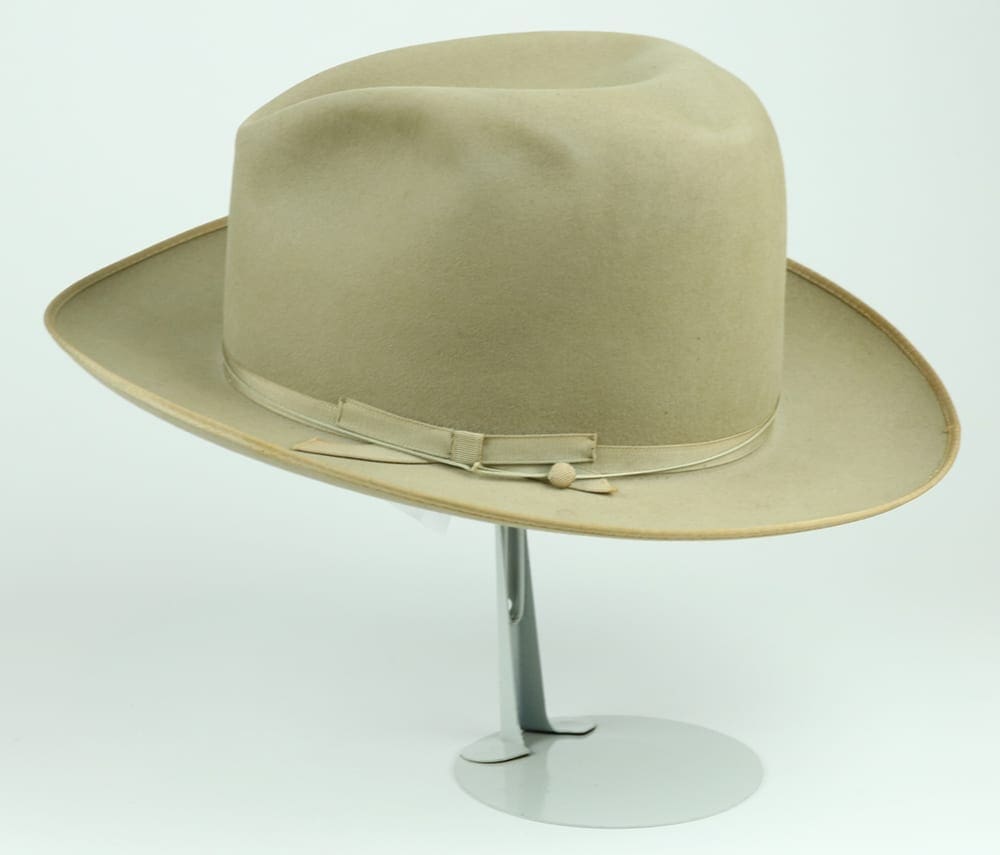
Orval Faubus’s Hat

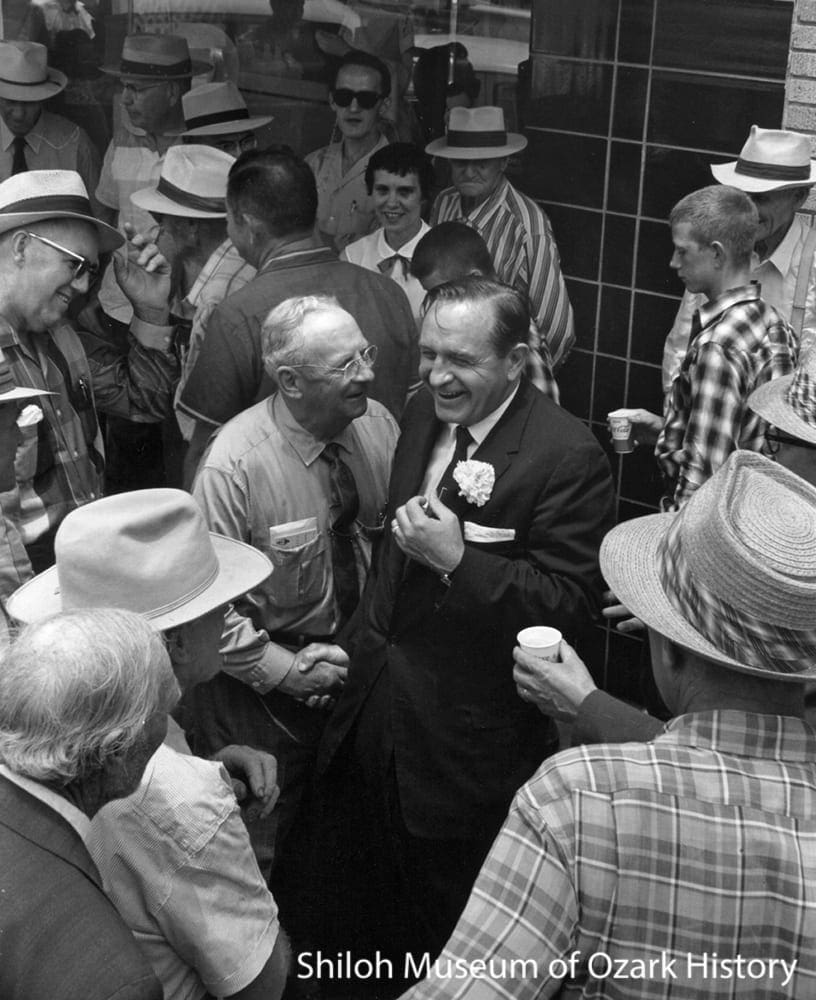
Gov. Orval Faubus (in dark suit) at the Springdale Savings and Loan Association dedication, June 11, 1960. Howard Clark, photographer/Caroline Price Clark Collection (S-2001-82-375)

Donated by James McNally

This circa 1960 hat was made for Gov. Orval Faubus by Harry Rolnick, co-owner and designer of Resistol Hats. Rolnick and E.R. Byer founded Byer-Rolnick Company in Dallas in 1927. Byer-Rolnick specialized in Western and dress hats branded Resistol for “resist all weather.” Resistol hats quickly became famous for their trademarked “Self-Conforming Band” and “Kitten Finish” (a method of processing felt which produced a softer texture than conventionally-made felt).

Gov. Orval Faubus (in dark suit) at the Springdale Savings and Loan Association dedication, June 11, 1960. Howard Clark, photographer/Caroline Price Clark Collection (S-2001-82-375)

Donated by James McNally

This circa 1960 hat was made for Gov. Orval Faubus by Harry Rolnick, co-owner and designer of Resistol Hats. Rolnick and E.R. Byer founded Byer-Rolnick Company in Dallas in 1927. Byer-Rolnick specialized in Western and dress hats branded Resistol for “resist all weather.” Resistol hats quickly became famous for their trademarked “Self-Conforming Band” and “Kitten Finish” (a method of processing felt which produced a softer texture than conventionally-made felt).
Fashion Clock

Donated by Zelmer and Norene Teague

Complete with Seth Thomas clockworks, this clock was made by Southern Calendar Clock Company of St. Louis in 1877. The upper dial keeps time; the lower dial is a perpetual calendar—it automatically adjusts for months of different lengths and indicates February 29 in each leap year.

John Sisemore, a farmer and Civil War veteran who lived near the Madison County community of Japton, bought this clock in 1877. According to Sisemore family lore, John was one of three people in Northwest Arkansas that year who purchased this brand of clock. The other buyers were the Johnson family who owned Johnson Mill in Washington County, and an unknown woman in Fayetteville.

John Sisemore’s clock was used by Sisemore family and descendants until 2008, when Zelmer “Teb” and Norene Teague donated it to the Shiloh Museum.

Fashion clock, 1877

Donated by Zelmer and Norene Teague

Complete with Seth Thomas clockworks, this clock was made by Southern Calendar Clock Company of St. Louis in 1877. The upper dial keeps time; the lower dial is a perpetual calendar—it automatically adjusts for months of different lengths and indicates February 29 in each leap year.

John Sisemore, a farmer and Civil War veteran who lived near the Madison County community of Japton, bought this clock in 1877. According to Sisemore family lore, John was one of three people in Northwest Arkansas that year who purchased this brand of clock. The other buyers were the Johnson family who owned Johnson Mill in Washington County, and an unknown woman in Fayetteville.

John Sisemore’s clock was used by Sisemore family and descendants until 2008, when Zelmer “Teb” and Norene Teague donated it to the Shiloh Museum.

Printer’s Block

Donated by Parker Rushing

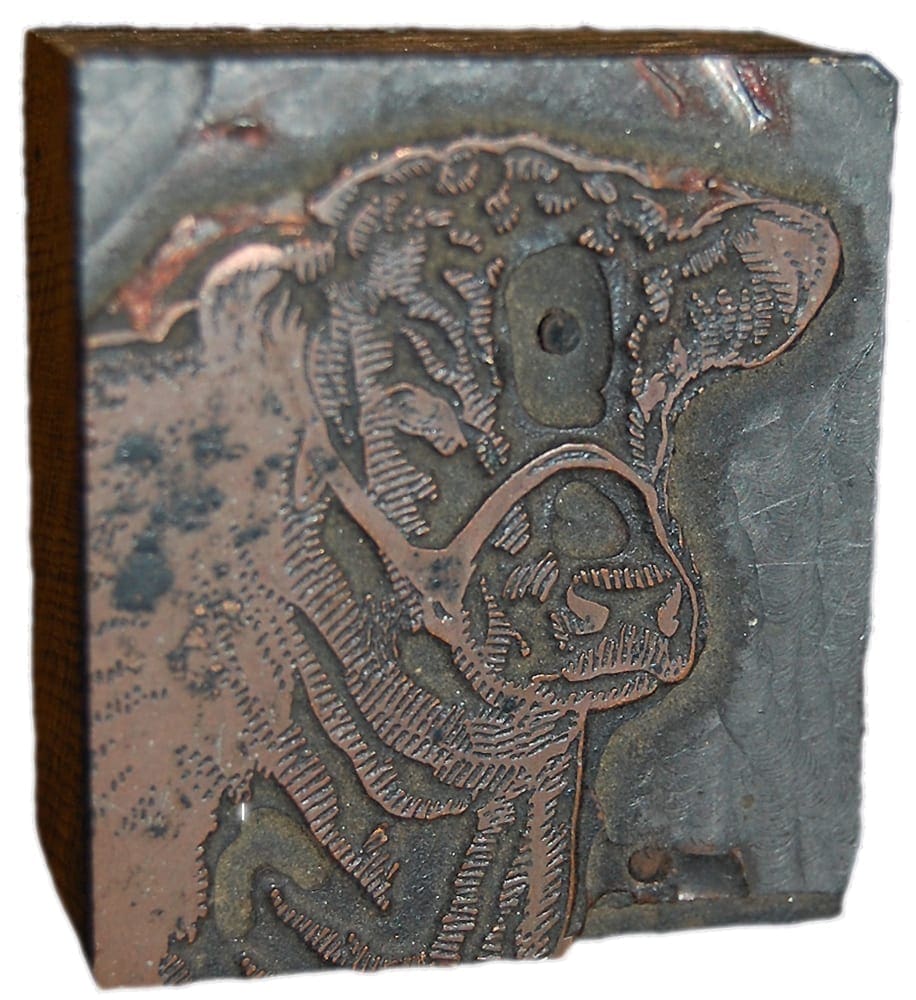
This metal-plated printer’s block engraved with a cow  was used by the Prairie Grove Enterprise newspaper, back in the days when the letters and illustrations on a newspaper page were hand-placed—or “typeset”—in preparation for printing.

With the slogan of “A Community Newspaper Dedicated to Building a Better Community,” the Enterprise was first published on November 19, 1936, by George and Ida Wiswell and their son, George Jr. In 1965 Tri-State Publishers of Springdale bought the Enterprise but the commercial printing department and equipment were reacquired by the Wiswells in July of that same year. Boyce Davis, owner of the Lincoln Leader, purchased the Enterprise in June 1967 and sold it back to the Wiswells. The Wiswells continued to operate the Enterprise until 1971 when they sold the business to the Alan Nicholas family of Cleveland, Ohio. The paper has been bought and sold multiple times since 1971; as of 2018, it is owned by Northwest Arkansas Newspapers LLC and published weekly as the Washington County Enterprise-Leader

Printer's block

Donated by Parker Rushing

This metal-plated printer’s block engraved with a cow  was used by the Prairie Grove Enterprise newspaper, back in the days when the letters and illustrations on a newspaper page were hand-placed—or “typeset”—in preparation for printing.

With the slogan of “A Community Newspaper Dedicated to Building a Better Community,” the Enterprise was first published on November 19, 1936, by George and Ida Wiswell and their son, George Jr. In 1965 Tri-State Publishers of Springdale bought the Enterprise but the commercial printing department and equipment were reacquired by the Wiswells in July of that same year. Boyce Davis, owner of the Lincoln Leader, purchased the Enterprise in June 1967 and sold it back to the Wiswells. The Wiswells continued to operate the Enterprise until 1971 when they sold the business to the Alan Nicholas family of Cleveland, Ohio. The paper has been bought and sold multiple times since 1971; as of 2018, it is owned by Northwest Arkansas Newspapers LLC and published weekly as the Washington County Enterprise-Leader.

Egg Basket

Donated by Billy Dean and Catherine Foster

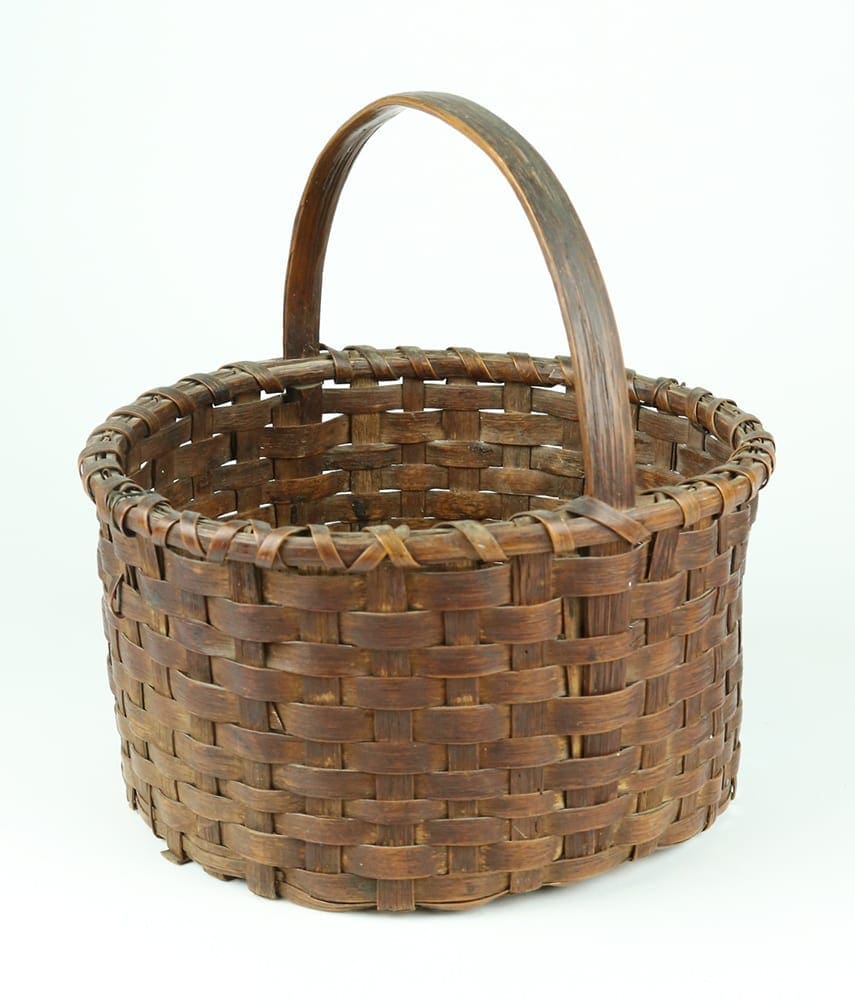
This basket belonged to Elnora Coralee Webb Fritts (1865-1962). She was born at Durham (Washington County) and lived there always. Elnora and her husband, Lon, had four children: Herman, Lillie, Hattie, and Maggie.

Billy Dean Foster, Elnora’s grandson by her daughter, Maggie, remembers filling this basket with eggs when he was a little boy, and what a heavy load it was when he carried it!

Elnora Fritts's egg basket

Donated by Billy Dean and Catherine Foster

This basket belonged to Elnora Coralee Webb Fritts (1865-1962). She was born at Durham (Washington County) and lived there always. Elnora and her husband, Lon, had four children: Herman, Lillie, Hattie, and Maggie.

Billy Dean Foster, Elnora’s grandson by her daughter, Maggie, remembers filling this basket with eggs when he was a little boy, and what a heavy load it was when he carried it!

Cardboard Bunnies

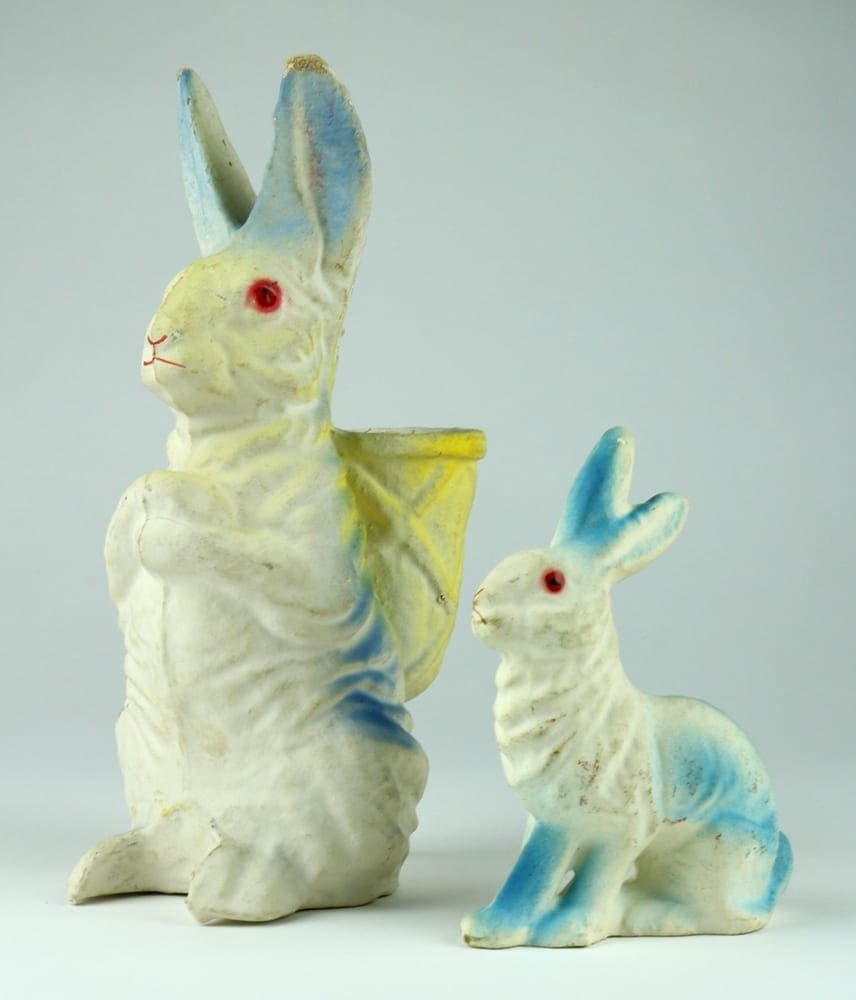
Pressed cardboard Easter rabbits,1930s

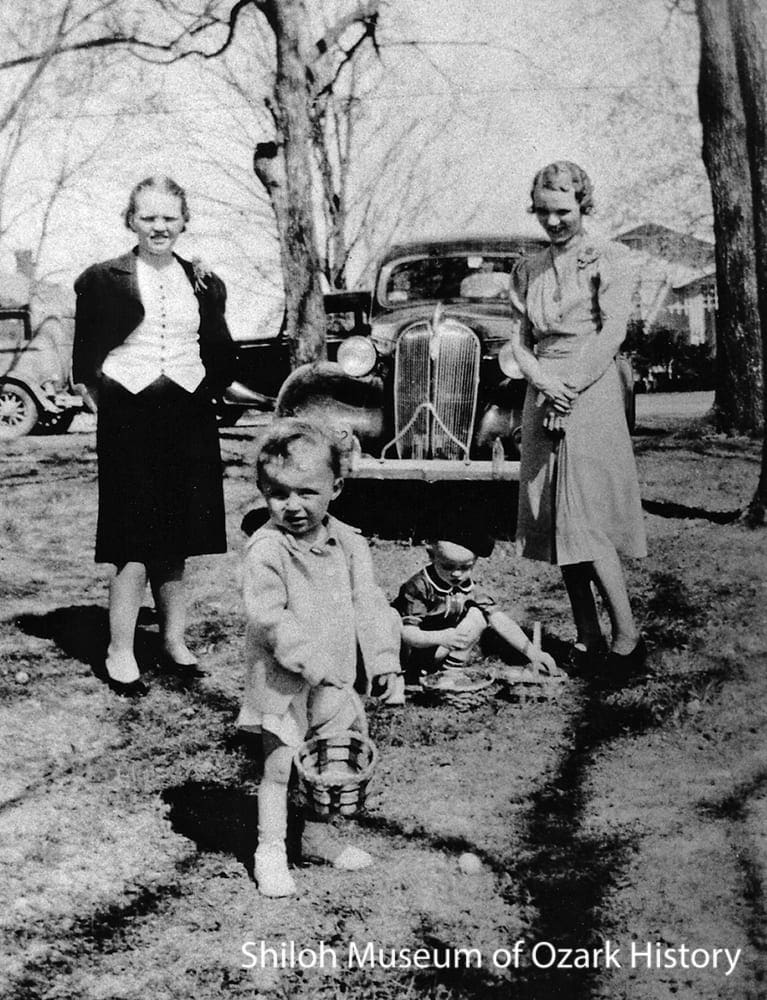
From left: Ruth Haigh Roberts, Lawrence Roberts, Orville Hall Jr. , and Janie Haigh Hall, at the Hall home in Fayetteville, April 9, 1939. Orville Hall Jr. Collection (S-2009-60-6)

Donated by Susan and Orville Hall Jr.

Bunnies made of molded or pressed cardboard or pulp were popular Easter decorations during the 1930s and 1940s. These belonged to Orville Hall Jr. of Fayetteville, the son of Orville Sr. and Janie Haigh Hall.

Pressed cardboard Easter rabbits,1930s

Donated by Susan and Orville Hall Jr.

Bunnies made of molded or pressed cardboard or pulp were popular Easter decorations during the 1930s and 1940s. These belonged to Orville Hall Jr. of Fayetteville, the son of Orville Sr. and Janie Haigh Hall.

From left: Ruth Haigh Roberts, Lawrence Roberts, Orville Hall Jr. , and Janie Haigh Hall, at the Hall home in Fayetteville, April 9, 1939.

From left: Ruth Haigh Roberts, Lawrence Roberts, Orville Hall Jr., and Janie Haigh Hall at the Hall home in Fayetteville, April 8, 1939. Orville Hall Jr. Collection (S-2009-60-6)

Bisque and Composition Dolls

Donated by Ada Lee Shook

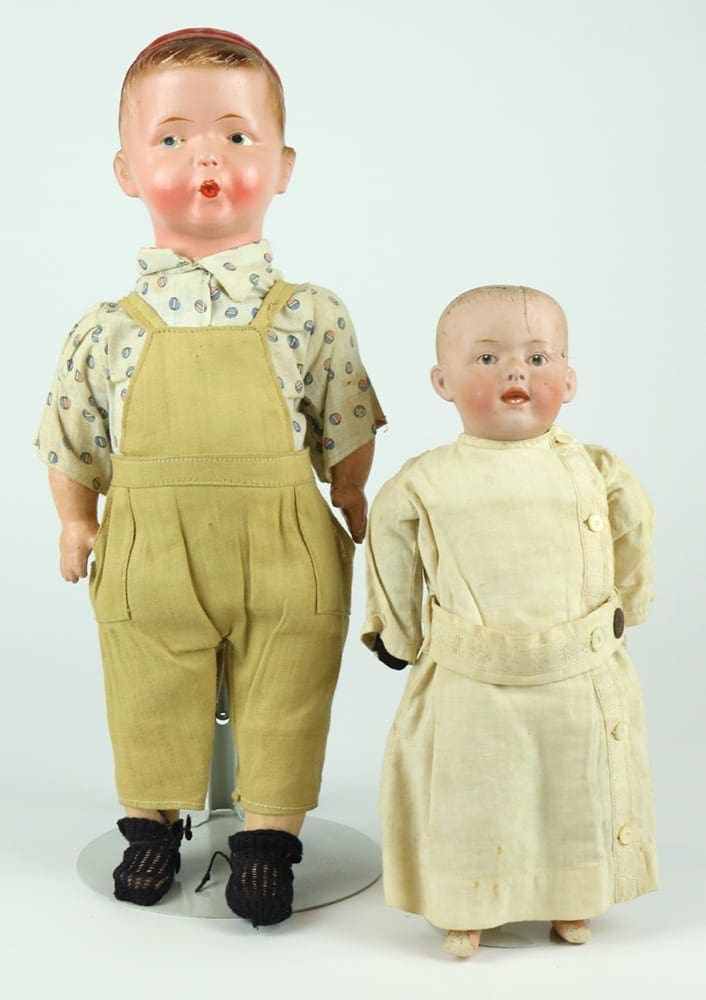
These dolls belonged to Frances Slaughter (b. 1905) when she was growing up in the Washington County community of Goshen. The dolls have no markings; no background information is known about them other than the baby is bisque (unglazed porcelain) and the boy is composition. Bisque dolls were developed in the late 1860s and were popular through the early 1900s. Composition is a mixture of glue and sawdust and was developed in the late 1800s. Sturdier than bisque, composition became the most common material used to manufacture dolls in the 1900s until the advent of plastic in the 1950s.

“Dazzler” Bicycle Lamp

Donated by Robert and Marion Roglin

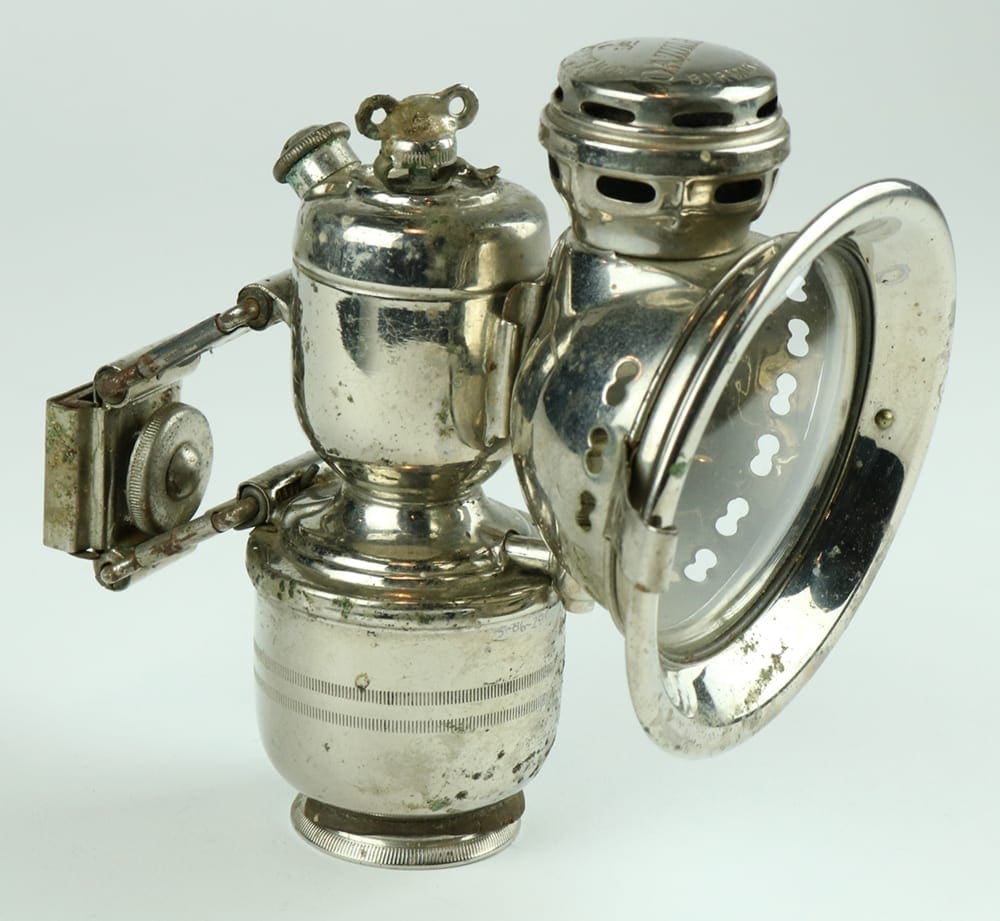
Manufactured around 1910 by Powell & Hanmer of Birmingham, England, the Dazzler is a carbide lamp powered by acetylene gas, produced when water, housed in an upper chamber of the lamp, drips into a lower chamber containing calcium carbide. The acetylene gas serves as fuel for a flame—the lamp’s light source. 

Powell & Hanmer exported their bicycle lamp under the name “Dazzler,” while the same model sold in England went by “Panther.”

In addition to lighting the way for bicyclists in the early 1900s, carbide lamps were used to light up buildings, lighthouse beacons, and automobile headlights.

Speaking of bicycles, we’re located on the Razorback Regional Greenway, a fun and safe way to ride your bike to the museum.

Transferware Plate

Donated by Melvin and Lucille Ferguson

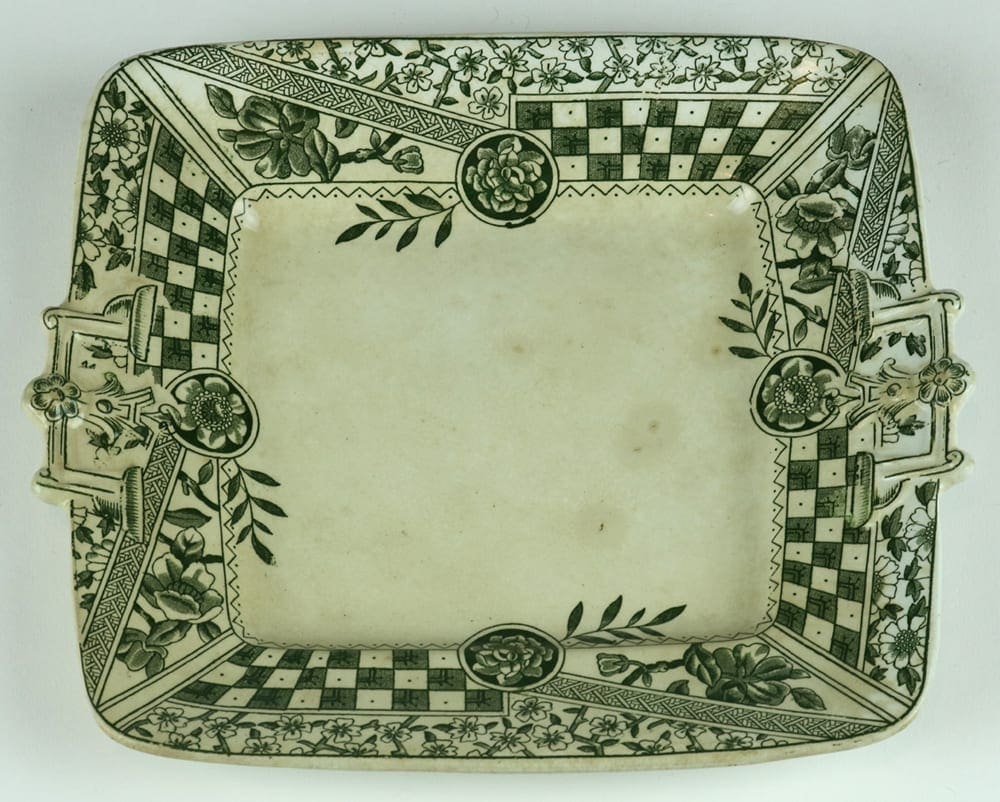
This transferware plate belonged to Hiram Hamilton and Ida May Lierly Tresner, who lived in the Round Mountain community east of Fayetteville. Their daughter, Laura Pearl Tresner Ferguson, recalled that the plate sat on the family dining table and was always used for serving crackers.

According to the Transferware Collectors Club website, “Transferware is the term givento pottery that has had a pattern applied by transferring the print from a copper plate to a specially sized paper and finally to the pottery body. While produced primarily on earthenware, transfer prints are also found on ironstone, porcelain and bone china.”

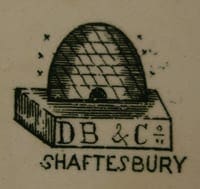
The plate was manufactured by Dunn Bennett & Company of England, a producer of stoneware items for the American market in the late 1880s and early 1900s. Shaftesbury is the pattern name.

Dun Bennett & Co. mark 

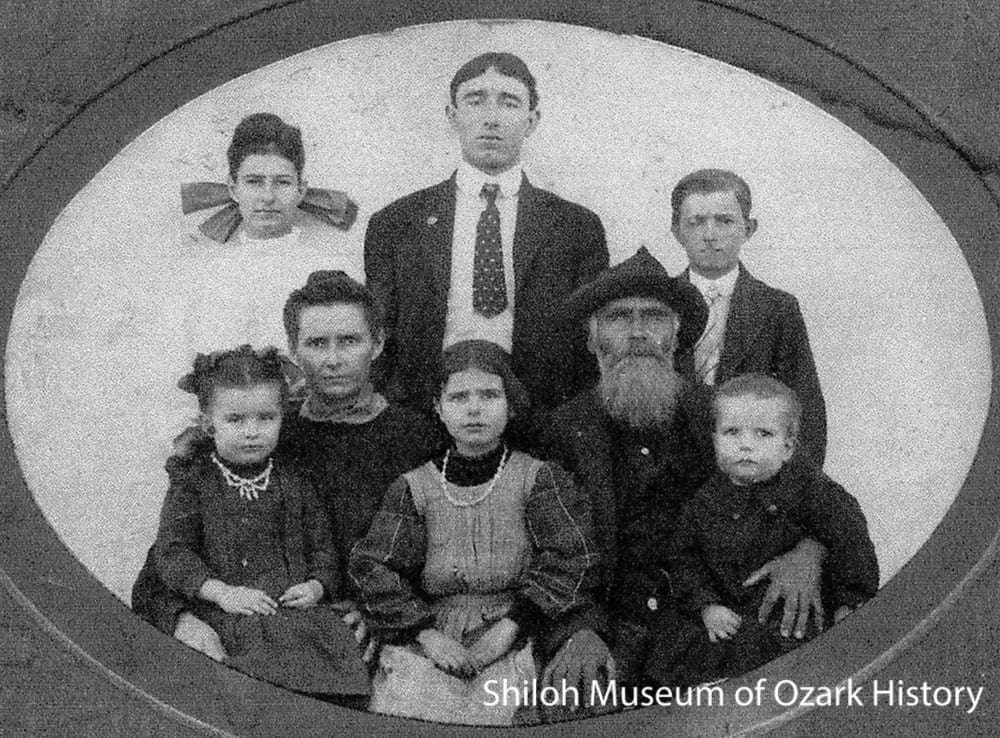
Tresner family, circa 1904. Back row, from left: Myrtle, Harvey, Orlando. Front row, from left: Ida May holding Tot, Laura Pearl, Hiram holding Jim. W. H. Albertson, photographer. Courtesy Melvin and Lucille Ferguson

Vegetable Dish

Donated by Willa Jean Tresner Crump

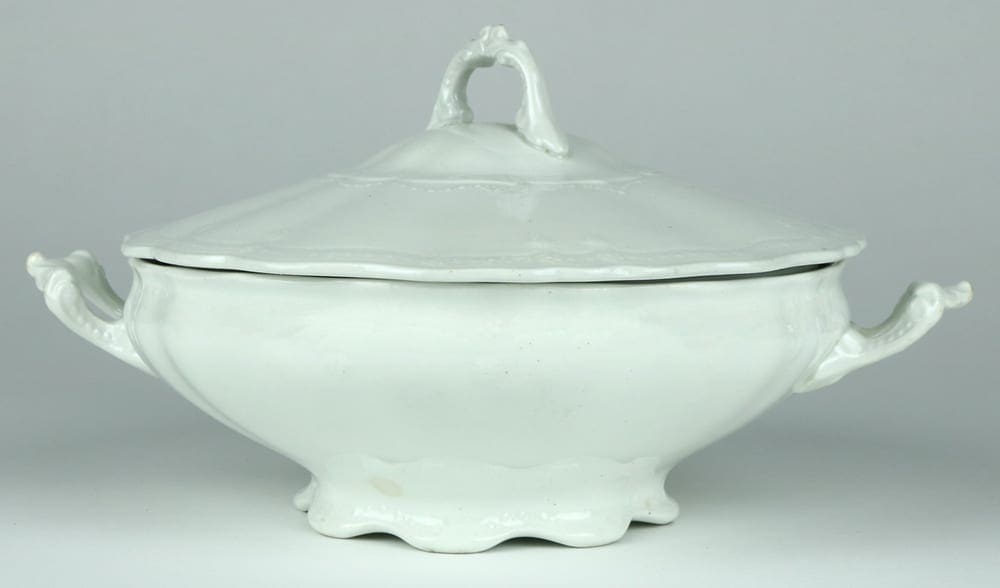
When Orlando Hudson “Orley” Tresner (1892-1980) and Virginia Ruth Chesser (abt. 1916-2000) married on November 29, 1934, they received this covered vegetable dish as a wedding present. The dish was made for export to the American market by J & G Meakin, Hanley, England.

Orley Tresner was from the Round Mountain community near Elkins in Washington County; Virginia Chesser was from the neighboring community of Baldwin.

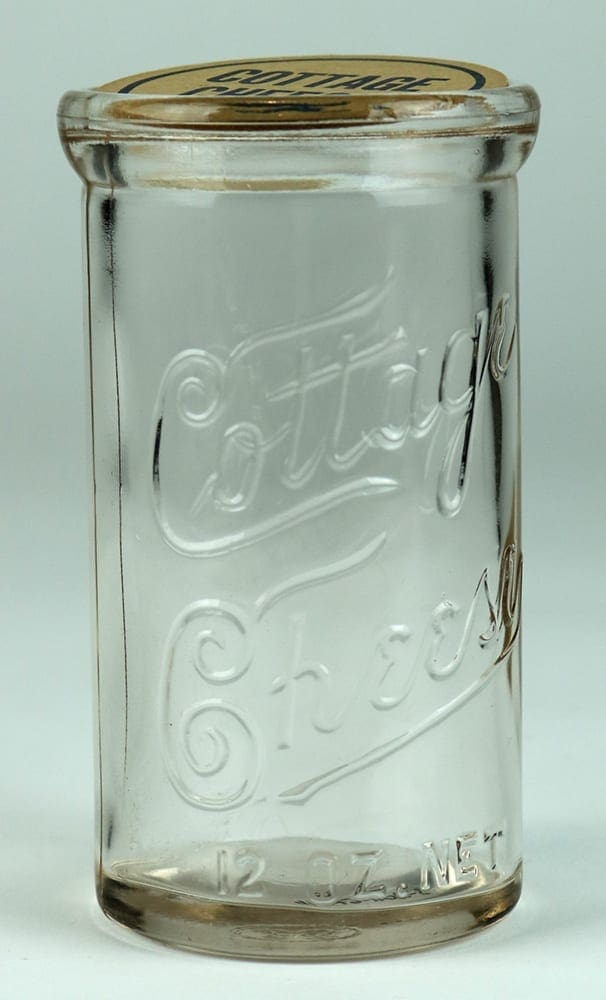
Cottage Cheese Jar

Donated by Deanna Stevens

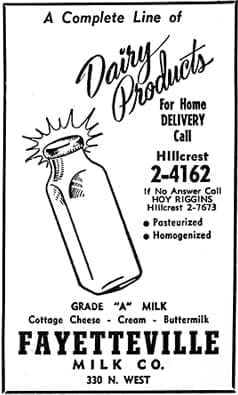
Located on the corner of West and Watson streets, Fayetteville Milk Company opened about 1930 and closed in 1974. Owners and operators through the years were Albert Ucker, Hoy and Toy Riggins, and Jack Daugherty. William and Deanna Stevens bought the building about 1975. Inside, they found old dairy and processing equipment, and cases of glass cottage cheese jars with the cardboard seals.

Fayetteville Dairy ad, 1955

Fayetteville telephone directory ad, 1955

NEWSLETTER