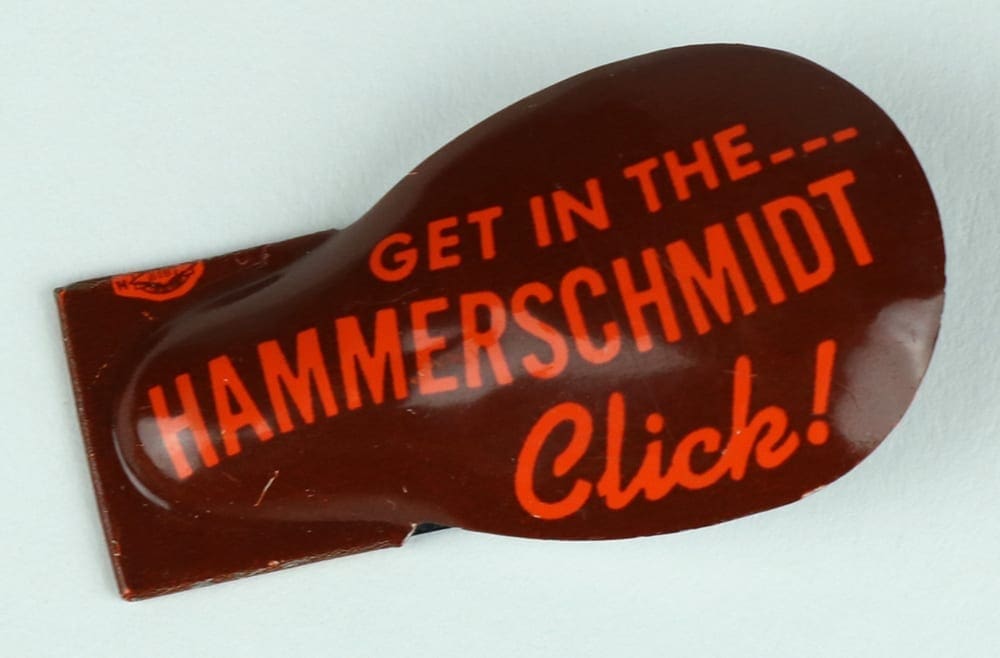
Campaign Clicker

Donated by Martha Lankford

John Paul Hammerschmidt (1922-2015) served Arkansas’s Third District in the U. S. House of Representatives for twenty-six years. A native of Harrison (Boone County), he attended the Citadel in South Carolina before receiving an appointment to the Naval Academy at Annapolis. He was later granted a request to change that appointment to West Point. Before making the transfer, he attended the University of Arkansas for the 1940-41 school year. Upon the bombing of Pearl Harbor, Hammerschmidt decided to go to work for a naval yard in California to aid in the war effort. Foregoing his appointment to West Point, he joined the Army Air Corps and served as a combat pilot in the China-Burma-India Theater, where he flew 217 combat missions.

Hammerschmidt’s political career started in Harrison and eventually led to challenging and defeating Democrat Jim Trimble for the Third District seat. He retired from Congress in 1993 but continued to be actively involved in public life as he served on several state and national committees.
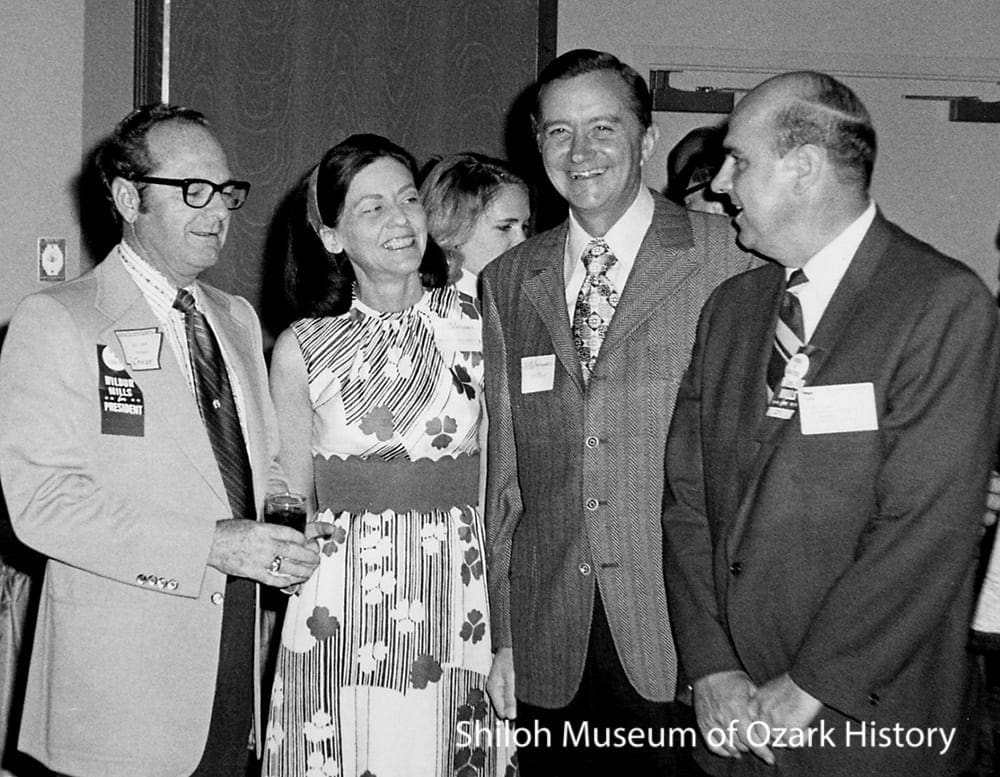
Congressman John Paul Hammerschmidt (third from left) at a National Chamber of Commerce convention in Washington, D. C., April 1973. Also pictured, from left: Springdale businessman Sandy Boone, Virginia Hammerschmidt, and Springdale Chamber of Commerce president Lee Zachary. Springdale Chamber of Commerce Collection (S-77-9-283)

Christmas Tree Music Box

Donated by Mary Vaughan

Springdale resident Mary Vaughan bought this music box the 1960s. The Christmas tree (which is made of hemp) is rotated to wind up a music box that plays “Jingle Bells.” The box is original and is stamped “Made in Japan, 1962.”

Donated by Mary Vaughan

Springdale resident Mary Vaughan bought this music box the 1960s. The Christmas tree (which is made of hemp) is rotated to wind up a music box that plays “Jingle Bells.” The box is original and is stamped “Made in Japan, 1962.”

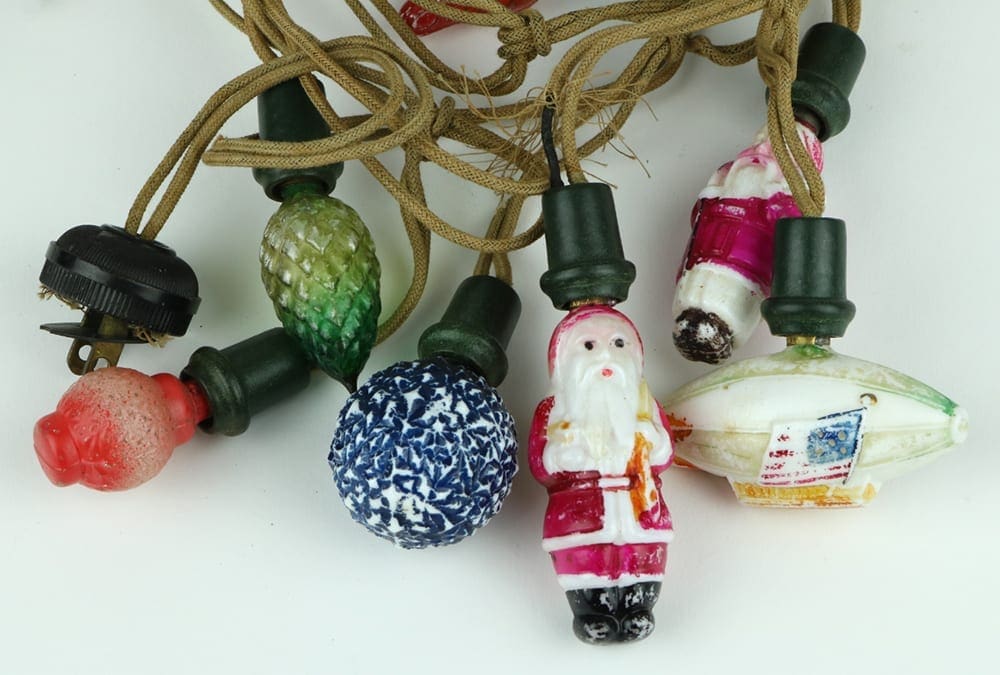
Christmas Lights

Donated by Curtis Hornor

The Samuel Ferdinand Hornor family of Lake Village (Chicot County), Arkansas, made their Christmas tree sparkle in the 1920s with this festive set of lights. Note the patriotic dirigible (airship) ornament next to Santa Claus.

The lights were passed down to Hornor’s grandson, Curtis Hornor of Springdale, who donated them to the Shiloh Museum in 1997.

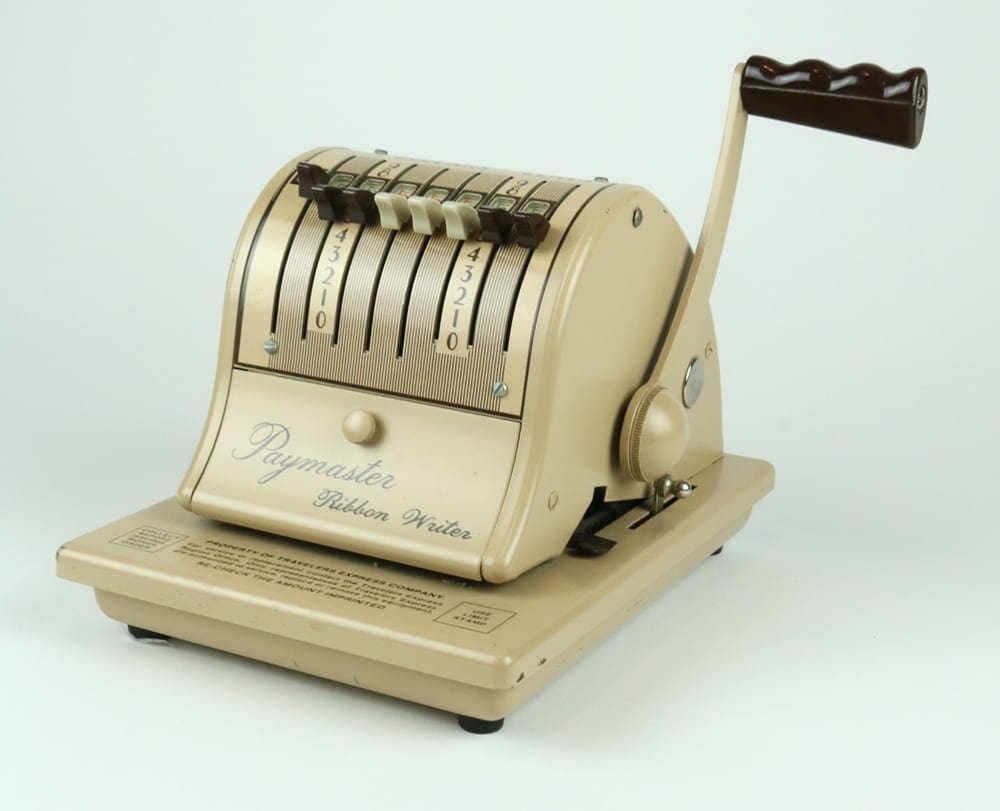
Paymaster Check Writer

Donated by Harps Food Stores General Office

Check writers, sometimes called check protectors, were designed to print checks which could not be tampered with or altered in some way. This manually-operated “Ribbon Writer” check writer, which dates to 1966, was used by Springdale’s Harps Food Stores

In 1930, Harvard and Floy Harp opened Harp’s Cash Grocery on corner of Emma Avenue and Water Street in downtown Springdale. The Harps succeeded even through the depths of the Great Depression, and expanded to a larger store in 1941.The Harps’ son Don joined the business in 1953. In 1956 the Harps opened Springdale’s first supermarket, Harp’s IGA at the corner of Sunset and Highway 71. They became a small chain when they opened Harps North in 1964. Two more sons, Reland and Gerald, and other members of the Harp family joined the business as the company expanded. Today, Harps has more than 85 stores in Arkansas, Kansas, Missouri, and Oklahoma. 

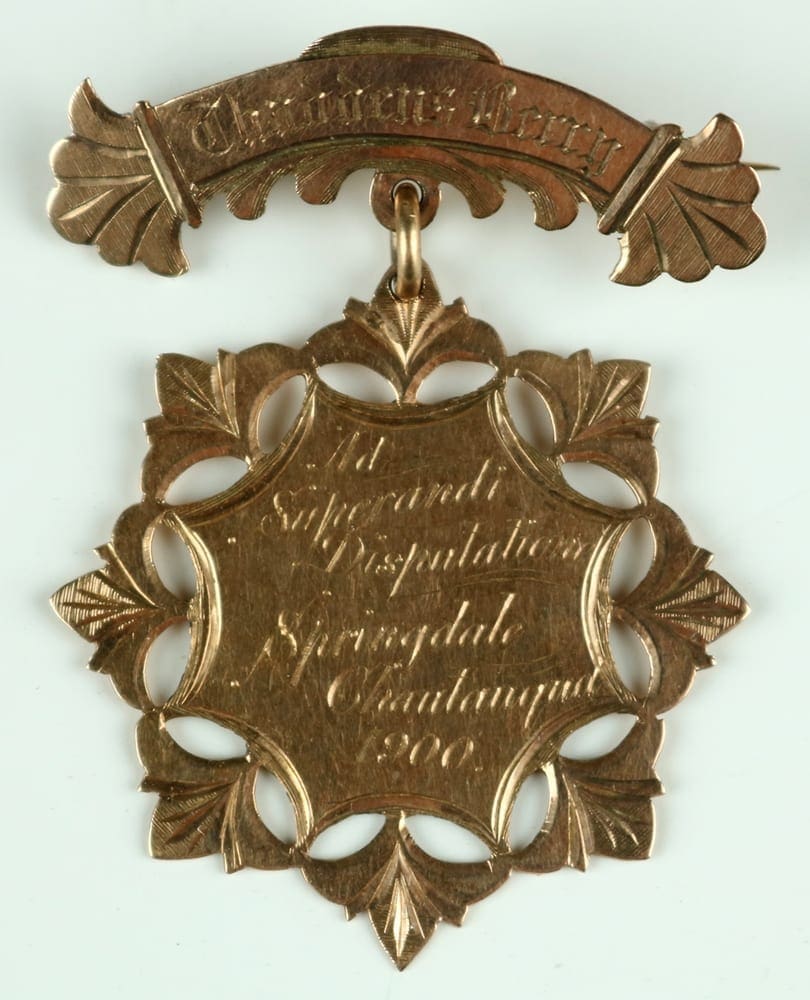
Chautauqua Debate Medal

Donated by the Mary Braun estate

In 1898, Professor Josiah Shinn, president of Springdale College, (located at the site of the present-day Springdale Public Schools administration building), organized Springdale’s first chautauqua, a summer event that featured educational entertainment. Originating in Chautauqua, New York, chautauquas enjoyed great popularity across the United States in the late 1800s and early 1900s.

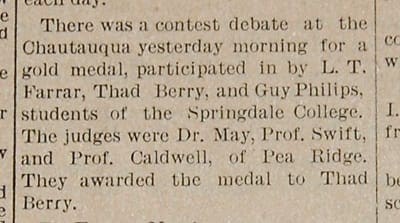
Springdale’s third chautauqua ran from June 24 to July 4, 1900, offering thirty-three lectures and cultural programs over the course of eleven days. On Thursday, June 28, a debate was held featuring three students from Springdale College:  L. T. (Lewis) Farrar, Thad Berry, and Guy Phillips.

The medal was discovered among items donated to the Shiloh Museum as part of the Mary Braun estate in 2014, 114 years after Thad Berry’s triumphant debate.

Springdale News, June 29, 1900

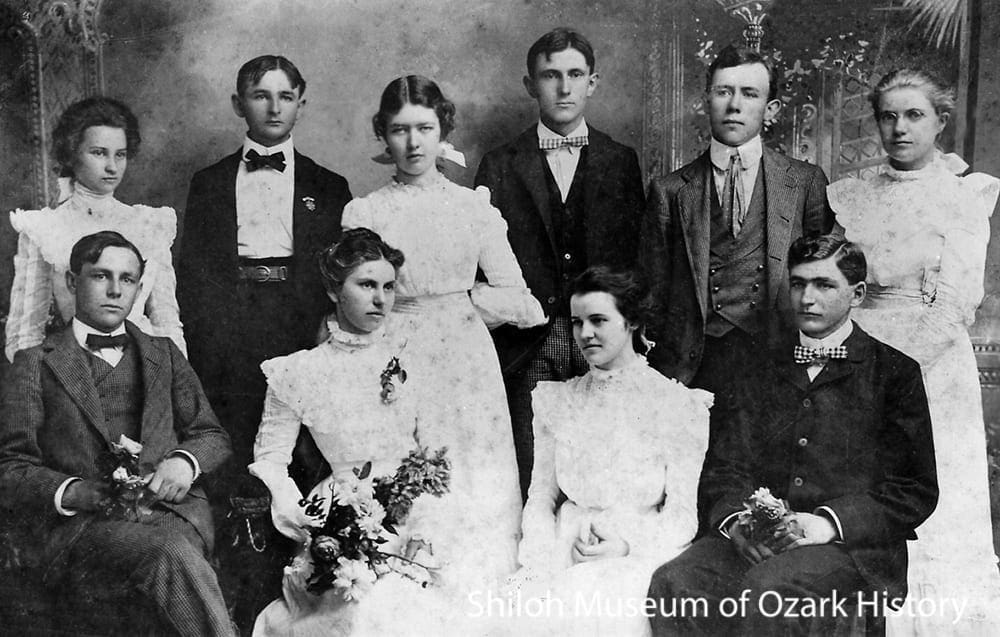
Springdale College graduating class of 1901. Thad Berry is standing second from left, and yes, he’s wearing his chautauqua debate medal. Standing left to right: Ethel Berry, Thad Berry, Cora Pritchard, John Young, Otto Christian, and Floy Daily. Seated left to right: Guy Phillips (one of the debaters bested by Thad Berry), Sophia Walker, Gussie Keeney, and Henry Ogden. Washington County Historical Society Collection (P-709)

Woodcarving

Donated by Kenneth Wickham

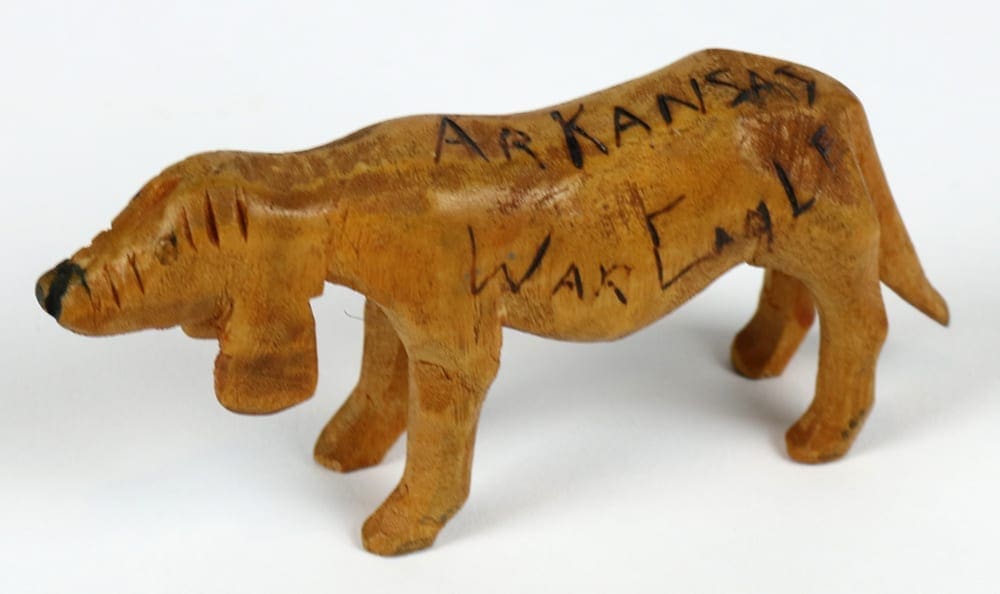
Born near Cassville, Missouri, Roy Harris (1893–1977) started carving in 1959 at the age of 65. He specialized in farm-related miniatures and exhibited at the War Eagle Craft Fair (Benton County) for several years.

In 1964 Harris and his wife moved to Frost’s High Sky Inn, an old tourist court east of Springdale. Due to failing eyesight he stopped whittling around 1970.

The donor of this carving burned the words “Arkansas War Eagle” and “1966” (not visible in the photo) on the piece.

Pillow Sham

Donated by Pam Redfern

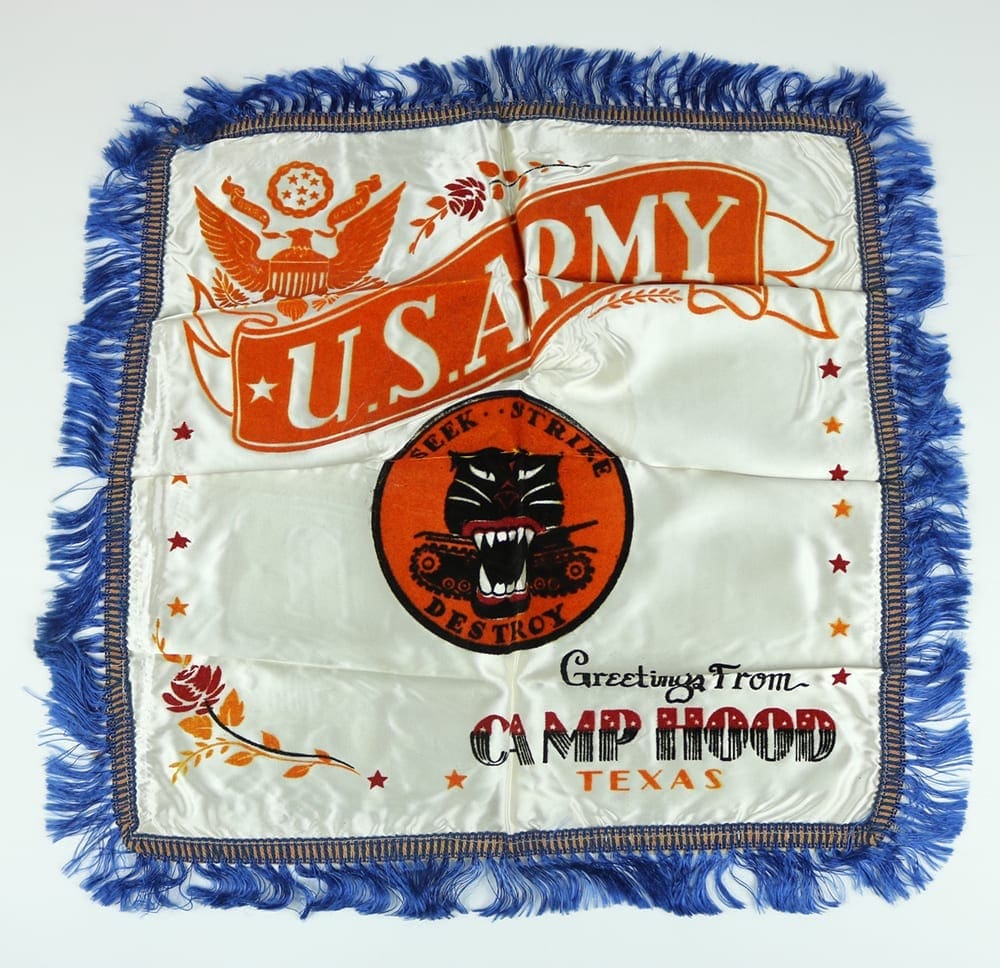
During World War II, Private First Class (PFC) William C. “Bill” Lewis of Vale (Washington County) sent this souvenir pillow sham to Mrs. Ora Smith, a family friend and neighbor.

PFC Lewis trained at Camp Hood, Texas, and served with the 609th Tank Destroyer Battalion in the European theater. Camp Hood, now Fort Hood, was the training center for all tank destroyer forces. The 609th entered action on September 27th, 1944, at Moutiers, France, and remained in the theater through the end of the war. The logo in the center of the sham is the emblem for the United States tank destroyer forces.

Vale was located south of Fayetteville. Today the area is within the Fayetteville city limits, south of Baum Stadium near the intersection of Cato Springs Road and Razorback Road. The Vale post office was established August 27, 1901, and remained in operation until 1951. From 1887 until 1911, children in the Vale community attended a rural school named Dowell’s Chapel.

Beret

Vera Key, 1920s. Bingham, photographer/Ada Lee Shook Collection (S-87-325-72)

Donated by Ada Lee Shook

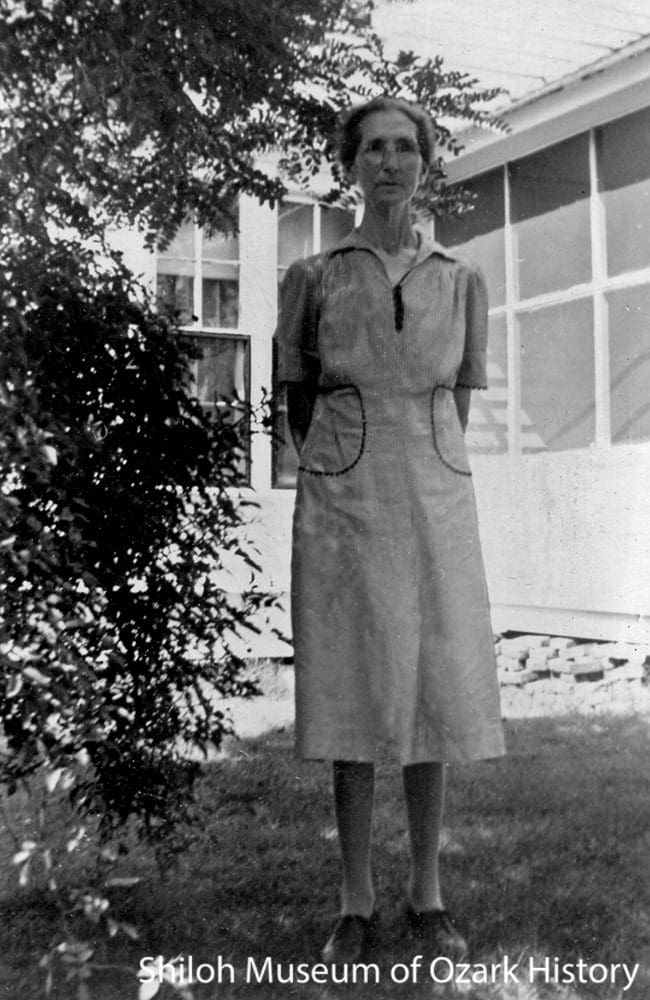
Vera Key (1893-1987) was a civic leader in Rogers, Arkansas. Born at War Eagle (Benton County) and raised in Rogers, she served in the Army Nurses Corps in World War I and later worked as a nurse for noted author and humorist Tom Morgan of Rogers.

A descendant of two pioneer families of Benton County, the Blackburns and the Keys, Vera Key devoted her later years to historic preservation projects. She was active in the effort to establish Pea Ridge as a national military park and was the first chairperson of the commission that founded the Rogers Historical Museum.

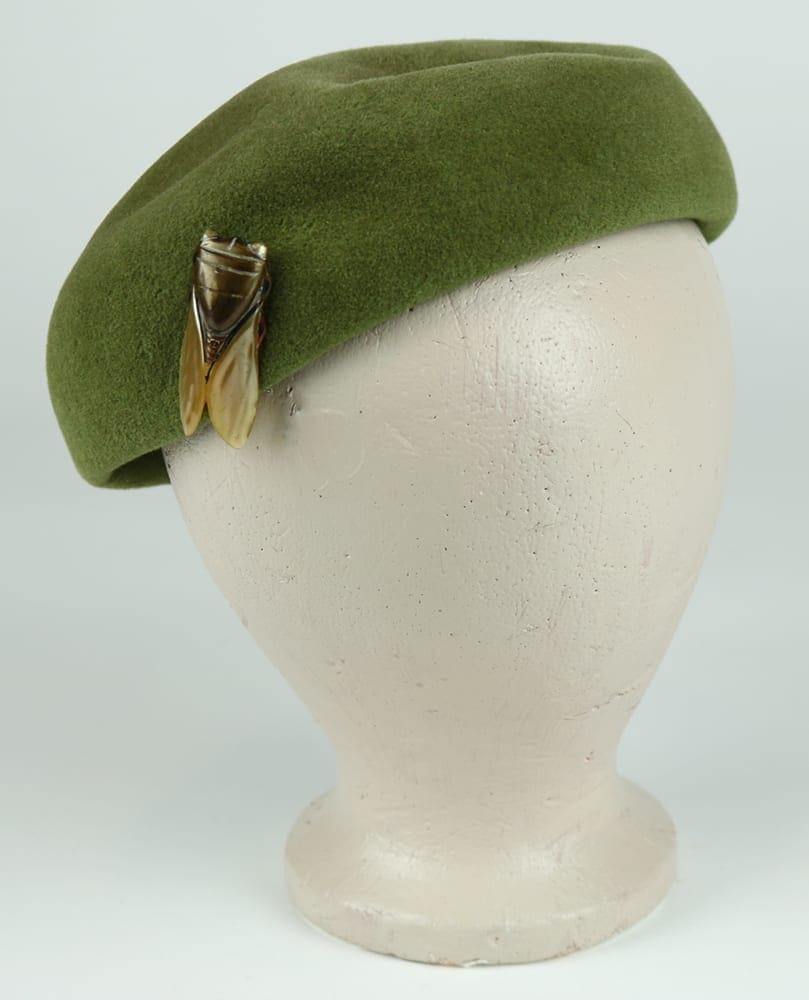
Vera Key acquired many hats over the years, which would have been natural for a woman of her era involved in civic organizations. Several of her hats, including this one, came from the Lazarus Department Store in Cincinnati, Ohio. This circa 1945 simple olive green wool beret was made all the more distinctive with the addition of the cicada insect pin. A blue bead hat pin held the hat in place.

Iroquois Beadwork Frame

Gertie Copening at Hindsville (Madison County), 1940s. Jim Vaughan Collection (S-96-126-3)

Donated by Jim Vaughan

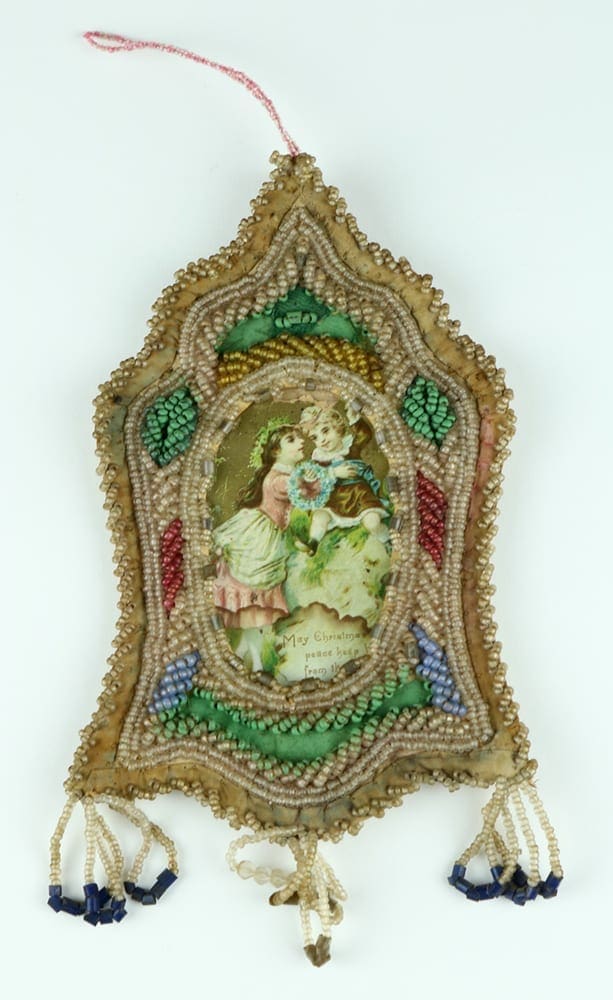
This decorative frame belong to Gertie Copening (1881-1962) of Hindsville (Madison County). The message on the postcard in the frame reads, “May Christmas peace keep winter from the heart.”

The frame is an example of Iroquois raised beadwork, a tradition originated by the Iroquois in western New York in the late 1700s. The beadwork became popular in the 1800s, when frames, pincushions, needle cases, and other items were sold as souvenirs and keepsakes at fairs, exhibitions, Wild West shows, and other venues. Contemporary artists continue this tradition of beadwork today.

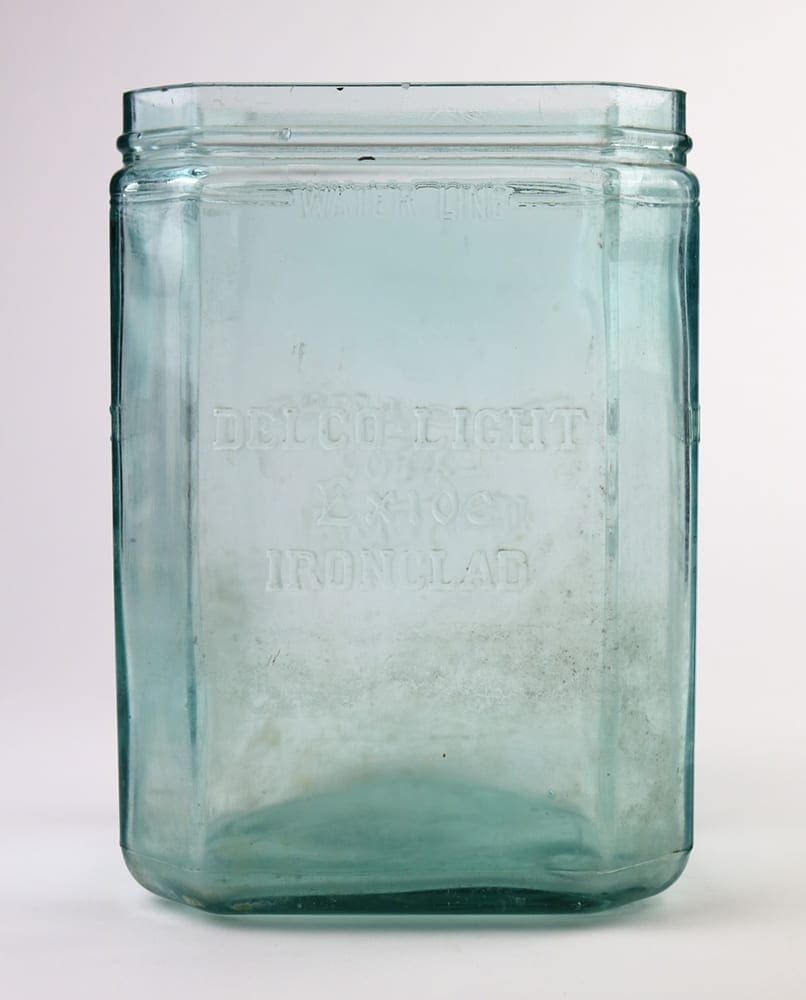
Delco Battery Jar

Donated by Truman Stamps

This Delco battery jar dates from the 1930s, before rural electrification came to the Ozarks. Many rural homes, farms, and small businesses produced their own electricity with a Delco-Light power system, which consisted of an engine powered by gasoline or kerosene, a generator, and a series of batteries. The batteries contained a corrosive mixture of acid and water and were stored in glass jars such as the one pictured here.

The Rural Electrification Administration was established in 1935 by President Franklin D. Roosevelt. It was tasked with getting electricity to rural areas not served by public and private power companies. However, it was after World War II before many rural Arkansas Ozark families saw electricity brought to their homes and farms.

NEWSLETTER