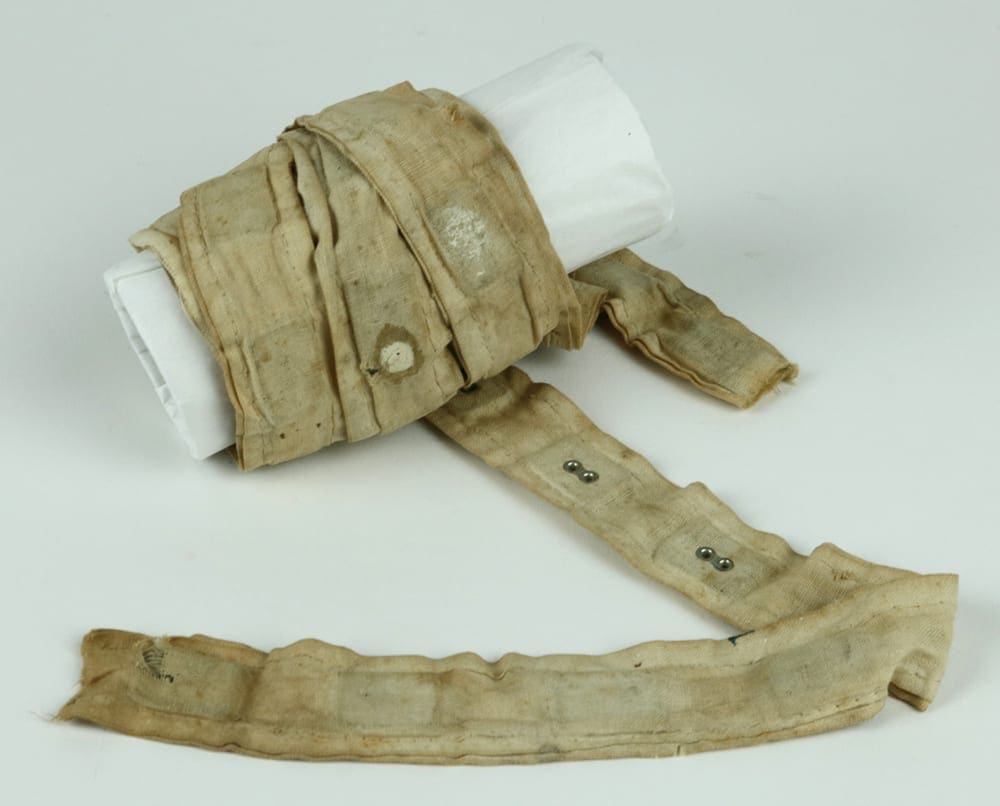
Odd Fellows Ribbon

This ribbon was worn by the Past Grand (a position similar to past president) of Springdale’s Independent Order of Odd Fellows (IOOF) New Era Lodge #36. The ribbon is reversible, with a red and black side. The red side was worn when attending lodge functions such as state meetings. The black side, shown here, was worn to the funeral of a brother Odd Fellow.

The IOOF is a worldwide fraternal organization whose history in the United States goes back hundreds of years. The first IOOF lodge in America was founded in Baltimore in 1819. The mission of the IOOF is “to visit the sick, relieve the distressed, bury the dead and educate the orphan.”

Springdale’s New Era Lodge #36 donated their historic meeting hall and its contents to the Shiloh Museum in 2005. Constructed in 1871, the building was originally shared by the Shiloh Primitive Baptist Church, the Liberty Missionary Baptist Church, the Methodist Episcopal Church, and the local Masonic Lodge. The Springdale lodge became owner of the building in 1935.
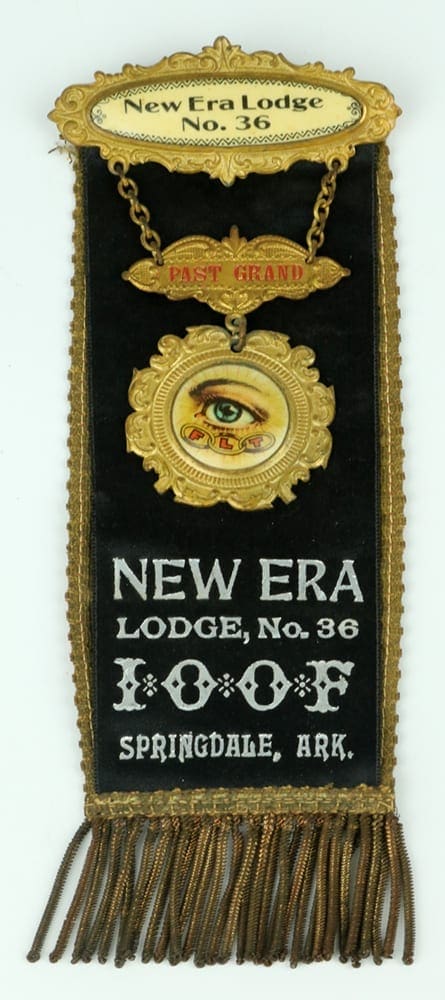
This ribbon was worn by the Past Grand (a position similar to past president) of Springdale’s Independent Order of Odd Fellows (IOOF) New Era Lodge #36. The ribbon is reversible, with a red and black side. The red side was worn when attending lodge functions such as state meetings. The black side, shown here, was worn to the funeral of a brother Odd Fellow.

The IOOF is a worldwide fraternal organization whose history in the United States goes back hundreds of years. The first IOOF lodge in America was founded in Baltimore in 1819. The mission of the IOOF is “to visit the sick, relieve the distressed, bury the dead and educate the orphan.”

Springdale’s New Era Lodge #36 donated their historic meeting hall and its contents to the Shiloh Museum in 2005. Constructed in 1871, the building was originally shared by the Shiloh Primitive Baptist Church, the Liberty Missionary Baptist Church, the Methodist Episcopal Church, and the local Masonic Lodge. The Springdale lodge became owner of the building in 1935.
Halloween Accessories

Donated by Susan and Orville Hall Jr.

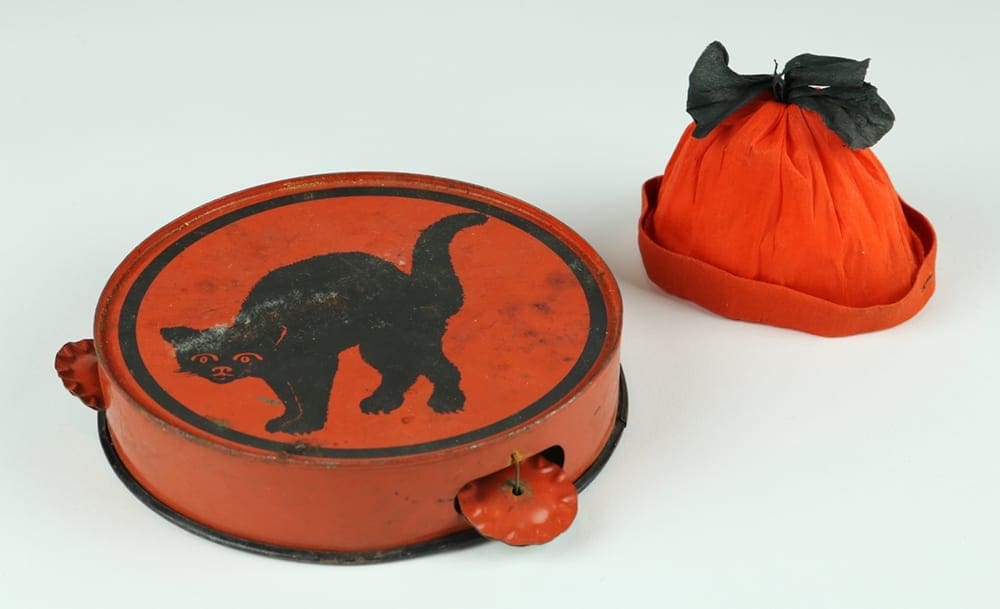
1930s Halloween tambourine and hatThis tin tambourine and crepe paper party hat date to the late 1930s or early 1940s. The tambourine was made by Kirchhof, a company in Newark, New Jersey, that specialized in small metal toys, noisemakers, seasonal ornaments, and other novelties. The hat is probably homemade.  The sides are held together with staples and the black bow on the top is secured by thin wire.

Orville Hall Jr. was born in 1935 in Fayetteville to Orville Sr., an agricultural and business economics professor at the University of Arkansas, and Janie Haigh Hall. Orville Jr. was an only child who lovingly cared for his toys, many of which he and his wife, Susan, have donated to the Shiloh Museum. He remembers wearing masks and hats at Halloween, and believes that the tambourine came from a Halloween party long, long ago.


Donated by Susan and Orville Hall Jr.

This tin tambourine and crepe paper party hat date to the late 1930s or early 1940s. The tambourine was made by Kirchhof, a company in Newark, New Jersey, that specialized in small metal toys, noisemakers, seasonal ornaments, and other novelties. The hat is probably homemade.  The sides are held together with staples and the black bow on the top is secured by thin wire.

Orville Hall Jr. was born in 1935 in Fayetteville to Orville Sr., an agricultural and business economics professor at the University of Arkansas, and Janie Haigh Hall. Orville Jr. was an only child who lovingly cared for his toys, many of which he and his wife, Susan, have donated to the Shiloh Museum. He remembers wearing masks and hats at Halloween, and believes that the tambourine came from a Halloween party long, long ago.

Toothpick Holder

Donated by Pat Cornish

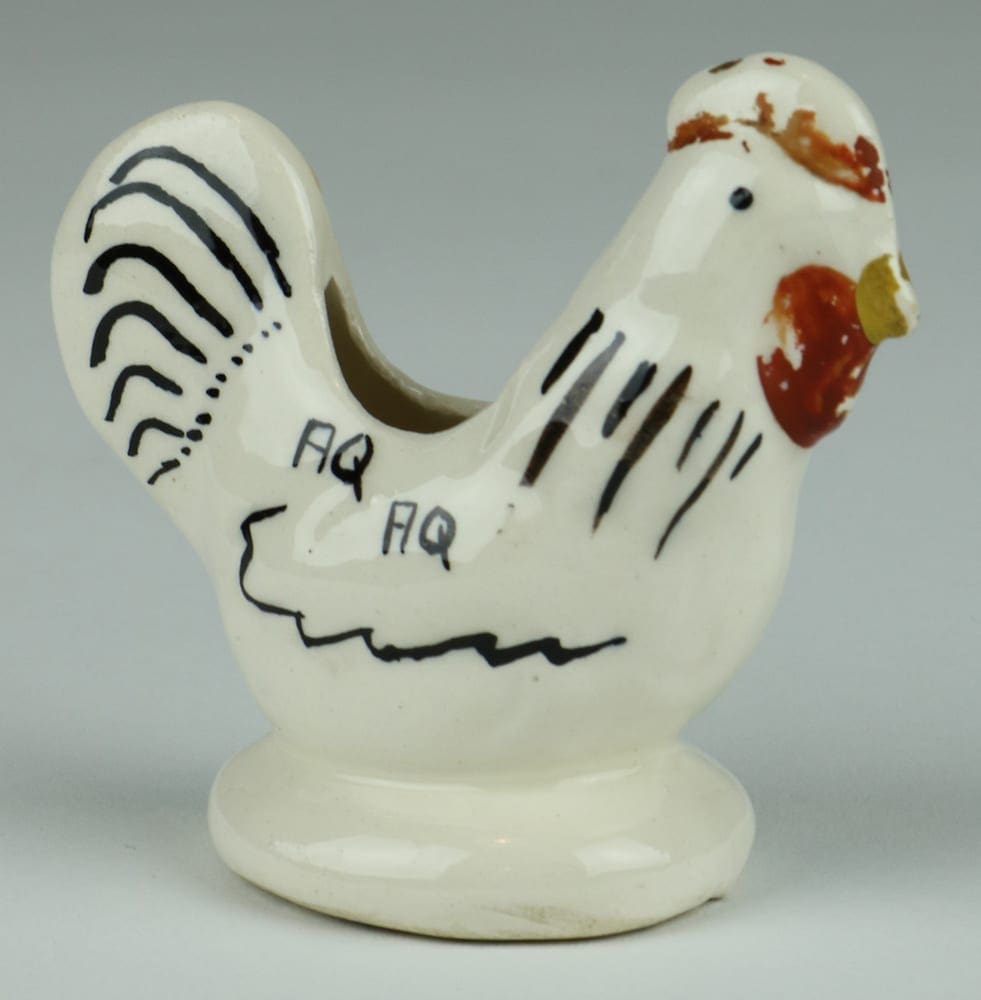
In the late 1940s Roy Ritter, a pioneer in the Arkansas poultry industry, was raising broilers at his AQ (Arkansas Quality) chicken farm in Springdale. At that time Ritter played host to business people from all over the country as part of his job in poultry sales. Of course when these folks came to Springdale, they wanted to go out and eat a chicken dinner! For a while, Ritter took his guests to the Rock House Café on Highway 71. 

It wasn’t long before Roy Ritter decided to open his own restaurant serving his own homegrown broilers. The first AQ Chicken House opened in 1947 on a hilltop in Springdale overlooking Ritter’s chicken houses in the valley below. Ritter owned the restaurant until 1970 when he sold it to pursue other interests.

AQ Chicken House toothpick holder

Donated by Pat Cornish

In the late 1940s Roy Ritter, a pioneer in the Arkansas poultry industry, was raising broilers at his AQ (Arkansas Quality) chicken farm in Springdale. At that time Ritter played host to business people from all over the country as part of his job in poultry sales. Of course when these folks came to Springdale, they wanted to go out and eat a chicken dinner! For a while, Ritter took his guests to the Rock House Café on Highway 71.

It wasn’t long before Roy Ritter decided to open his own restaurant serving his own homegrown broilers. The first AQ Chicken House opened in 1947 on a hilltop in Springdale overlooking Ritter’s chicken houses in the valley below. Ritter owned the restaurant until 1970 when he sold it to pursue other interests.

Football Helmet

Donated by Peggy Gregory

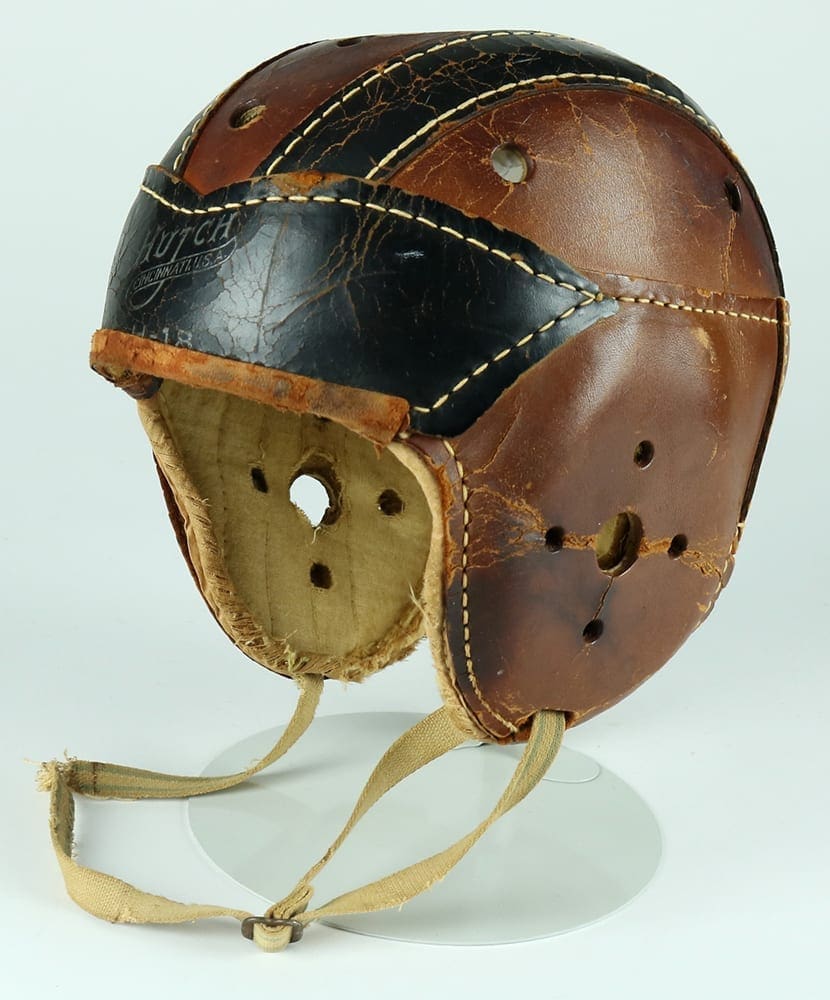
This football helmet was worn by Donald Gregory in the 1940s. He was born in Mountainburg (Crawford County) in 1932, where his father Floyd ran a mercantile. The Gregorys later moved to Fayetteville, where Floyd opened Gregory’s Men’s Store on the downtown square.

leather football helmet

Donated by Peggy Gregory

This football helmet was worn by Donald Gregory in the 1940s. He was born in Mountainburg (Crawford County) in 1932, where his father Floyd ran a mercantile. The Gregorys later moved to Fayetteville, where Floyd opened Gregory’s Men’s Store on the downtown square.

Gibson Basket

Donated by Ada Lee Shook

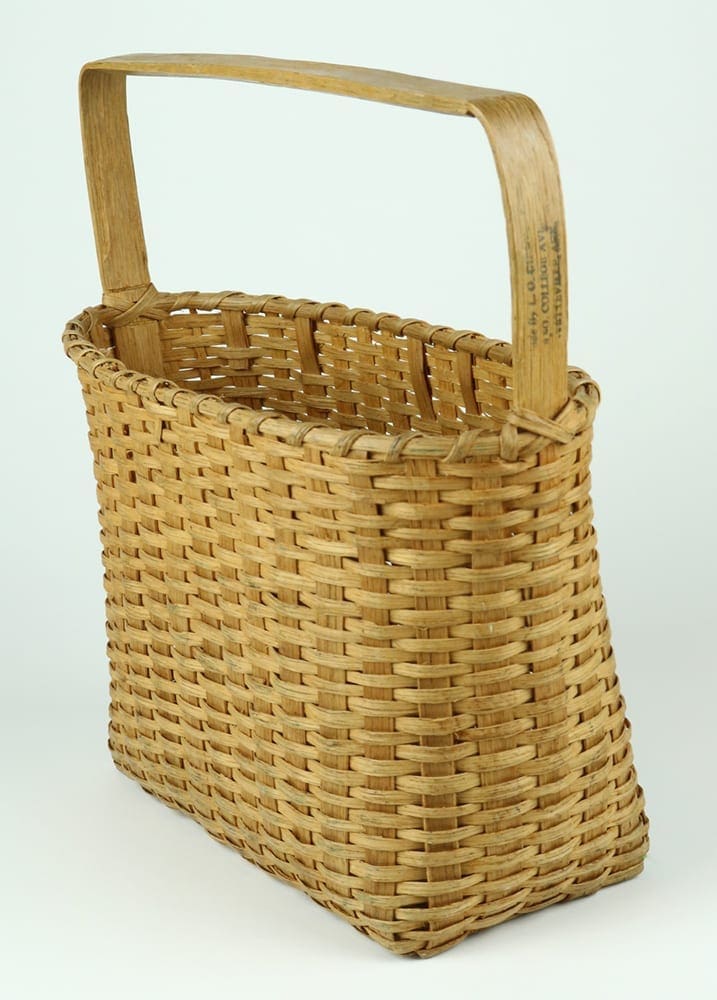
Gibson oak basketLena Smith of Fayetteville owned this basket made by Lifus G. Gibson (1879-1958). Gibson was a member of a well-known family of Northwest Arkansas basket makers. Born and raised in Spring Valley (Washington County), he lived in Fayetteville in his later years, where he made and sold baskets. 

Lifus Gibson was a descendant of Christopher Columbus “Lum” Gibson (1865-1947), who settled near Spring Valley where he originated a basket design in the 1880s that has been passed down in the Gibson family for generations. Gibson baskets are distinctive for their twill-patterned rectangular base, thick handle, and absence of nails.

Gibson oak basket

Donated by Ada Lee Shook

Lena Smith of Fayetteville owned this basket made by Lifus G. Gibson (1879-1958). Gibson was a member of a well-known family of Northwest Arkansas basket makers. Born and raised in Spring Valley (Washington County), he lived in Fayetteville in his later years, where he made and sold baskets.

Lifus Gibson was a descendant of Christopher Columbus “Lum” Gibson (1865-1947), who settled near Spring Valley where he originated a basket design in the 1880s that has been passed down in the Gibson family for generations. Gibson baskets are distinctive for their twill-patterned rectangular base, thick handle, and absence of nails.

Serving Set

Donated by Paula Thompson

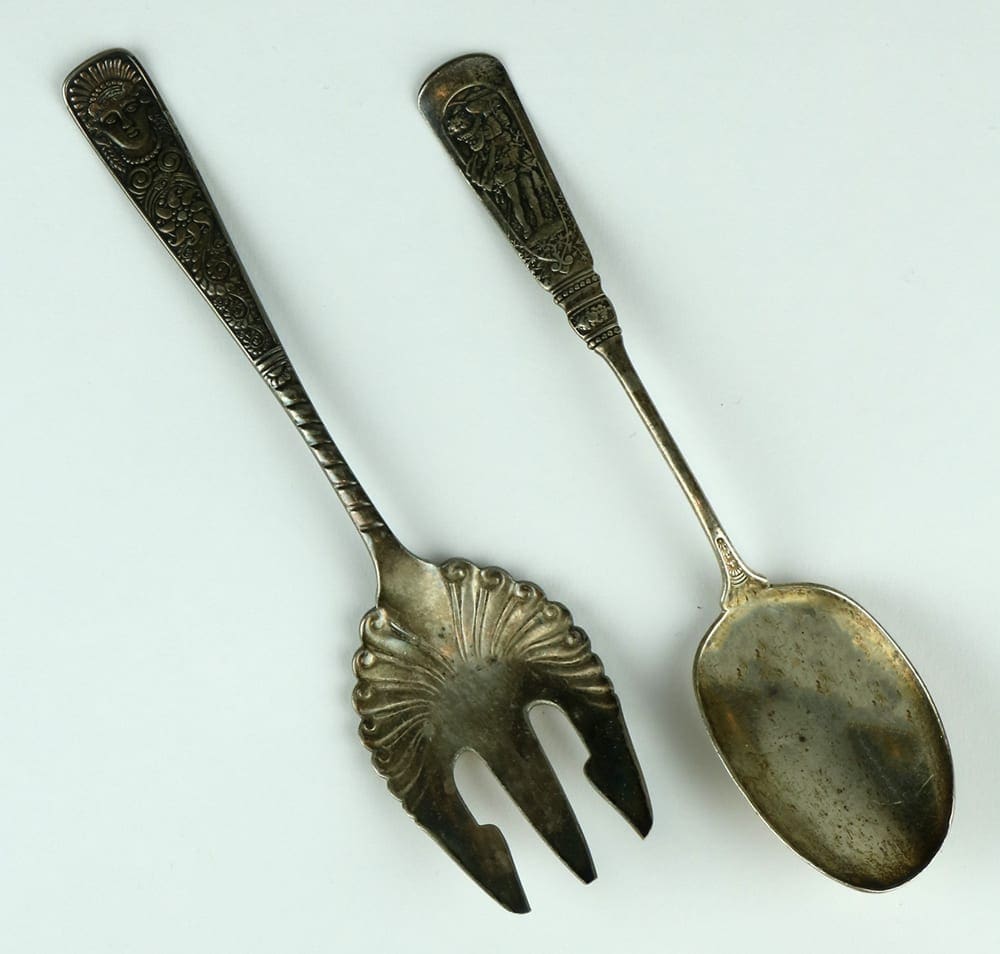
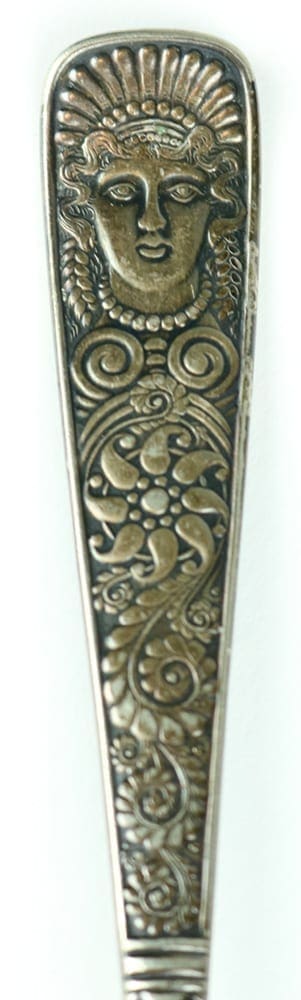
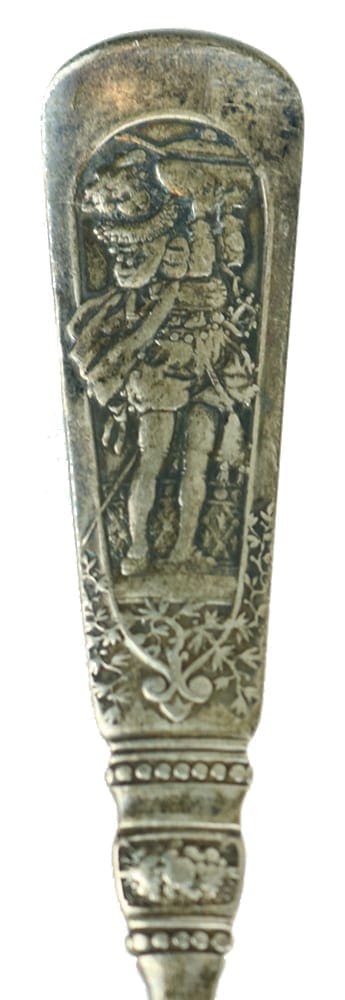
This fancy silverware no doubt saw its share of holiday meals. The serving fork is silverplate and was from the 1847 Rogers Brothers line manufactured by Meriden Britannia Company ( Meriden, CT). The pattern name is “Assyrian Head,” designed and patented by Henry V. Hirschfeld in 1886. The serving spoon, part of a set, is sterling silver made by Gorham Manufacturing Company (Providence, RI) in the “Fontainebleau” pattern, designed by Gorham’s leading designer, Antoine Heller. It was also introduced in 1886.

The flatware pieces come from the Robert M. Thompson household of Rogers (Benton County). Priscilla Cabinette Thomas of Virginia was a violin and piano teacher and church organist In the late 1800s when she met Robert Marion Thompson, a minister from Kentucky. The couple was married around 1896 and had two sons. The Thompson family moved to Rogers, Arkansas, about 1900 where Robert preached at the First Christian Church and other nearby churches.

Flask

Donated by Pauline Lancaster

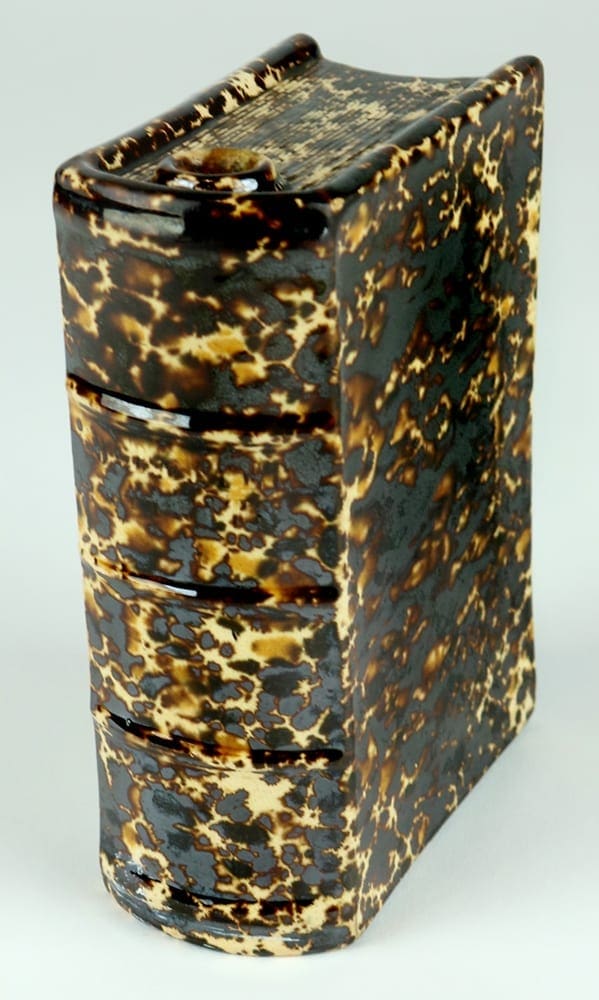
This yellow earthenware flask with a Rockingham glaze was made by Lyman Fenton & Co., Bennington, Vermont, sometime between 1849-1858. The spine of the “book” boasts the tongue-in-cheek title, Departed Spirits. The letter G is stamped under the title.

According to the donor, it was left behind by a hobo as payment for a night’s stay in a barn.

Earthenware book-shaped flask, circa 1850

Donated by Pauline Lancaster

This yellow earthenware flask with a Rockingham glaze was made by Lyman Fenton & Co., Bennington, Vermont, sometime between 1849-1858. The spine of the “book” boasts the tongue-in-cheek title, Departed Spirits. The letter G is stamped under the title.

According to the donor, it was left behind by a hobo as payment for a night’s stay in a barn.

Class Ring

Donated by Ada Lee Shook

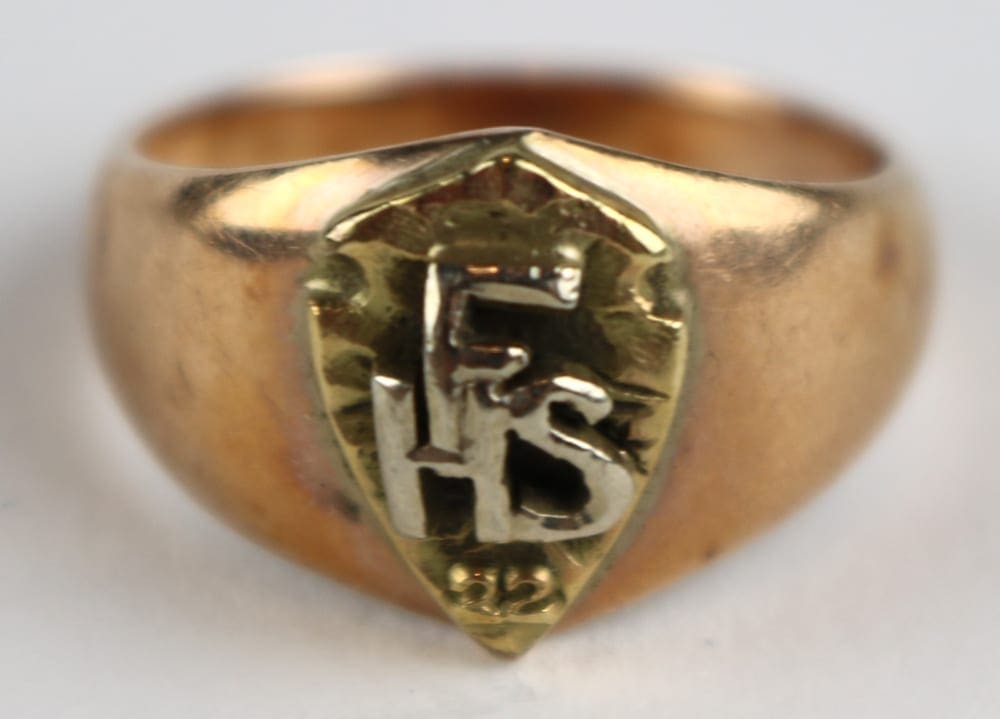
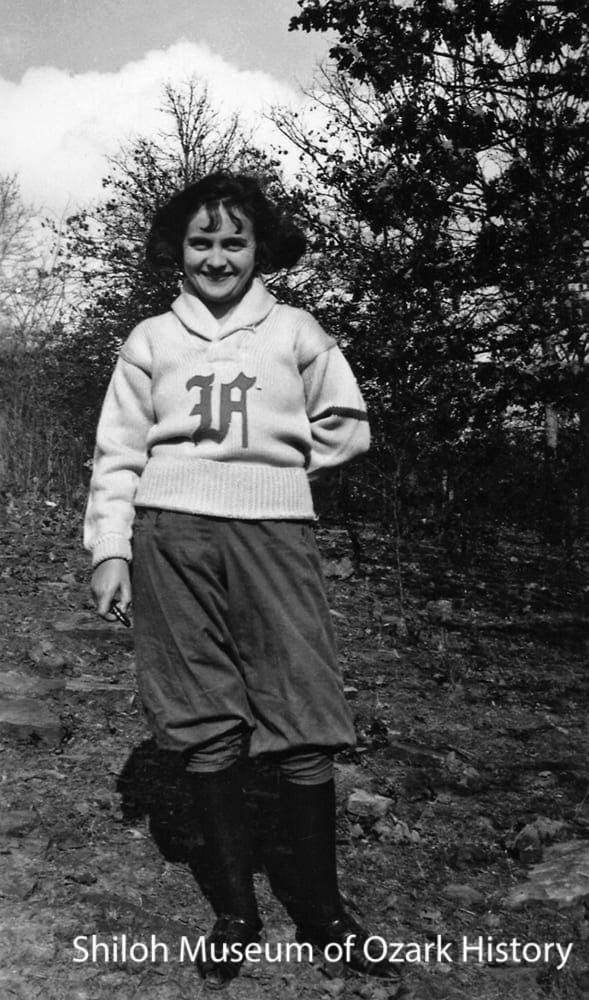
This ring belonged to Frances Slaughter. She was born in Goshen (Washington County) in 1905 to John Lionel (“Lona”) and Ada Bevers Slaughter. The family moved to Springdale in 1914 and from there to Fayetteville in 1921, where Frances graduated from high school in 1922.

Frances kept a diary during her senior year. On Friday, May 19, 1922, she wrote of graduation day:

Frances Slaughter, circa 1922. Carl Smith, photographer/Ada Lee Shook Collection (S-98-85-965)

I got up at 8 A.M. and went to the Ozark [Theater] to practice. I got real mad at Mary Dale Sellers. I pressed my dress, made sandwiches and everything. I went to the Commencement exercises and after that to Thelma’s bunkin [bunking] party. We started to go on a night gown parade but saw a drunk man. We went to sleep about 3 A.M.

In the fall of 1922 Frances Slaughter entered the University of Arkansas. There she met William Carl Smith, whom she married in 1926. The Smiths had one daughter, Ada Lee, born in 1928.

Linen Suit

Donated by Victoria McKinney

This linen outfit with its ruffled collar is a variation of the Little Lord Fauntleroy suit, a popular style of the late 1800s and early 1900s. In the book Little Lord Fauntleroy by Frances Hodgson Burnett (1886), the  main character wore black velvet knee pants and jacket over a lace-collared blouse. The style was popular until about 1920.

Evan Lewis Martin wore this suit as a child. The son of Henry and Bette Hannah Martin of Pea Ridge (Benton County), he died at the age of 12 in 1910. In his obituary, the Rogers (Arkansas) Democrat noted that Evan “loved music and was a fine singer for a child.”

Little Lord Fauntleroy linen suit, circa 1910

Donated by Victoria McKinney

This linen outfit with its ruffled collar is a variation of the Little Lord Fauntleroy suit, a popular style of the late 1800s and early 1900s. In the book Little Lord Fauntleroy by Frances Hodgson Burnett (1886), the  main character wore black velvet knee pants and jacket over a lace-collared blouse. The style was popular until about 1920.

Evan Lewis Martin wore this suit as a child. The son of Henry and Bette Hannah Martin of Pea Ridge (Benton County), he died at the age of 12 in 1910. In his obituary, the Rogers (Arkansas) Democrat noted that Evan “loved music and was a fine singer for a child.”

NEWSLETTER