Ballot Box
This is believed to be one of the first ballot boxes used in Madison County. It was discovered in a barn on the east side of Huntsville and purchased by the Shiloh Museum in 1992.


Donated by Dorothy Gill Leslie
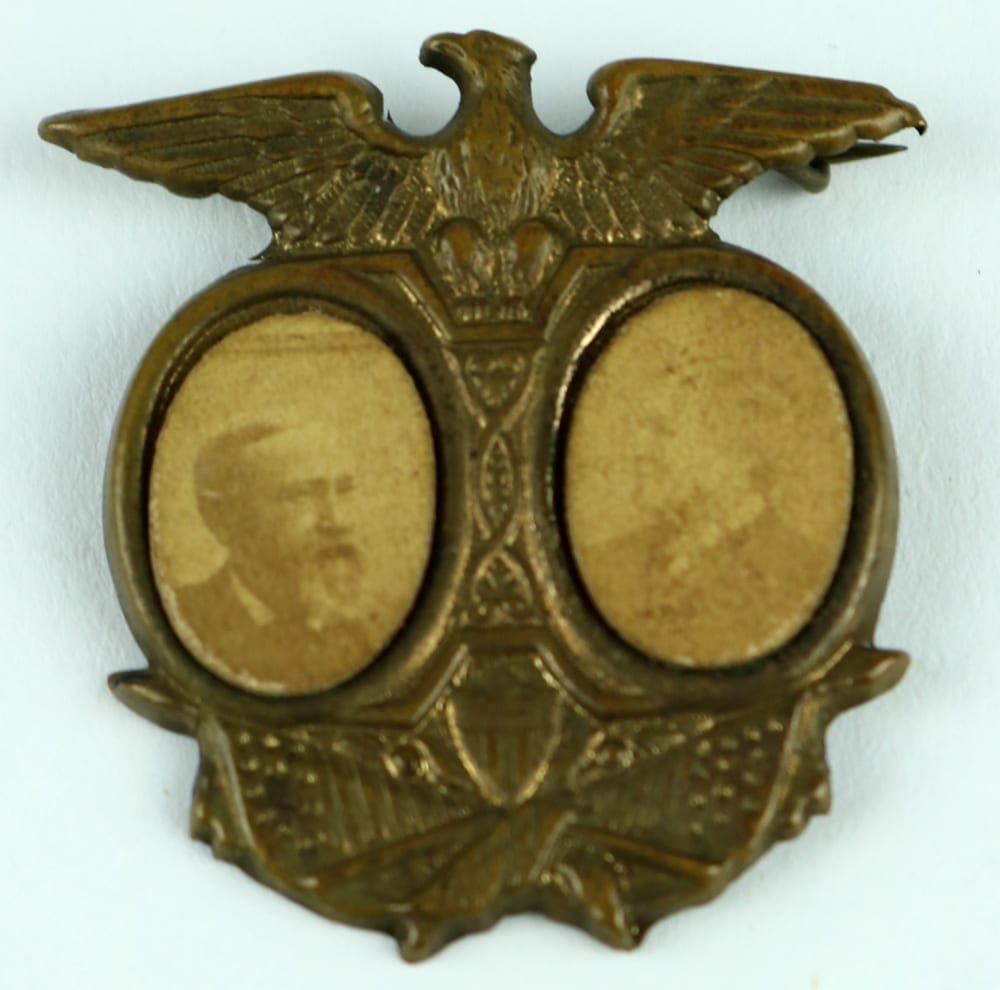
Benjamin Harrison (left) and Levi Morton distributed badges like this during their 1888 campaign as the Republican nominees for president and vice president. They lost the popular vote by 90,000 but managed to beat President Grover Cleveland in the electoral college vote of 233 to 168.
This badge belonged to John Rees Gill He and his wife, Della Ahart Gill, lived for a time in the Madison County community of Pettigrew, where John Gill became the town’s first postmaster in 1898.
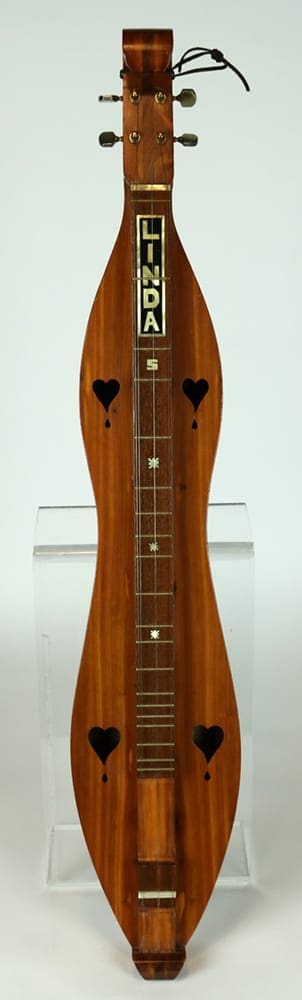
“Stape,” as he was known to friends and family, made over 300 dulcimers, guitars, and other stringed instruments in the 1970s and 1980s out of his Springdale business, Hillbilly Dulcimer Shop.
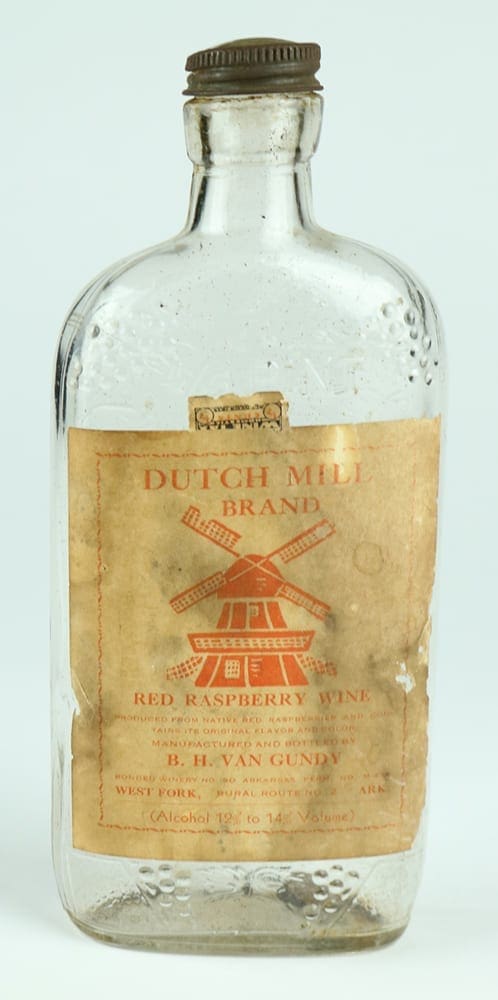

Benjamin H. Van Gundy (1892-1964) was a farmer and sometimes winemaker who lived in southeast Washington County with his wife, Velma (1889-1962), and mother-in-law, Hattie Horr. Ben and Velma were natives of Kansas who moved to Arkansas sometime in the early 1900s. The Van Gundys lived at Hazel Valley for a time, later moving to the Baldwin community east of Fayetteville. They are buried in Reese Cemetery near Elkins.
The 1925-26 Washington County Rural Directory and Registry of Farms includes this entry for Ben Van Gundy:

Donated by the Springdale Police Department
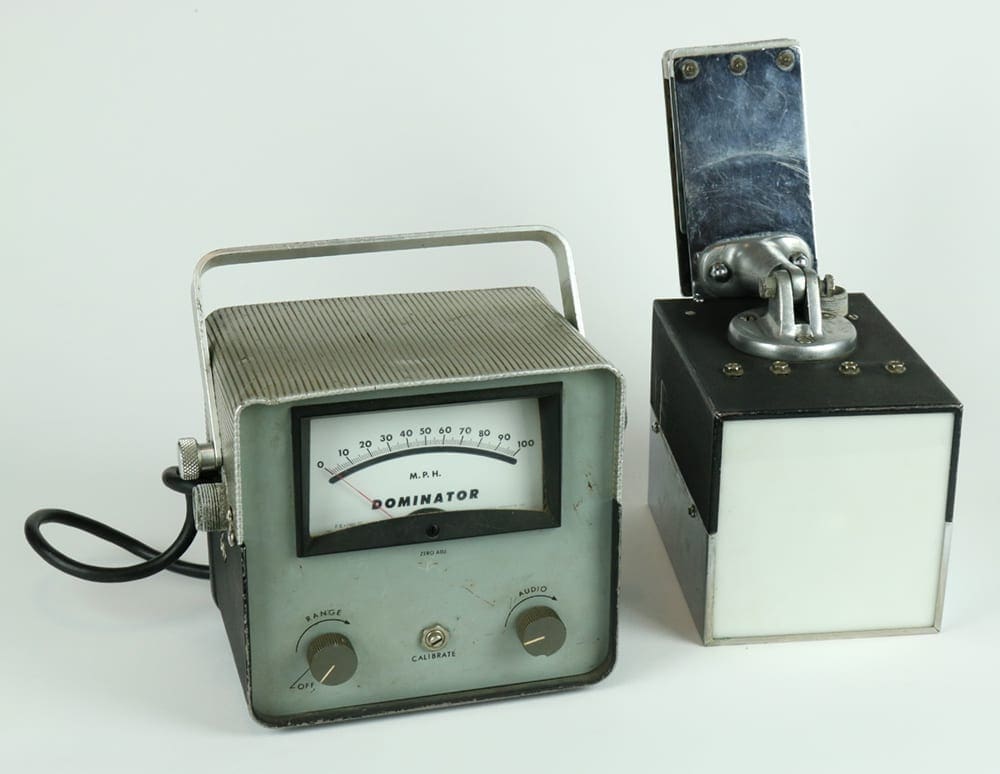
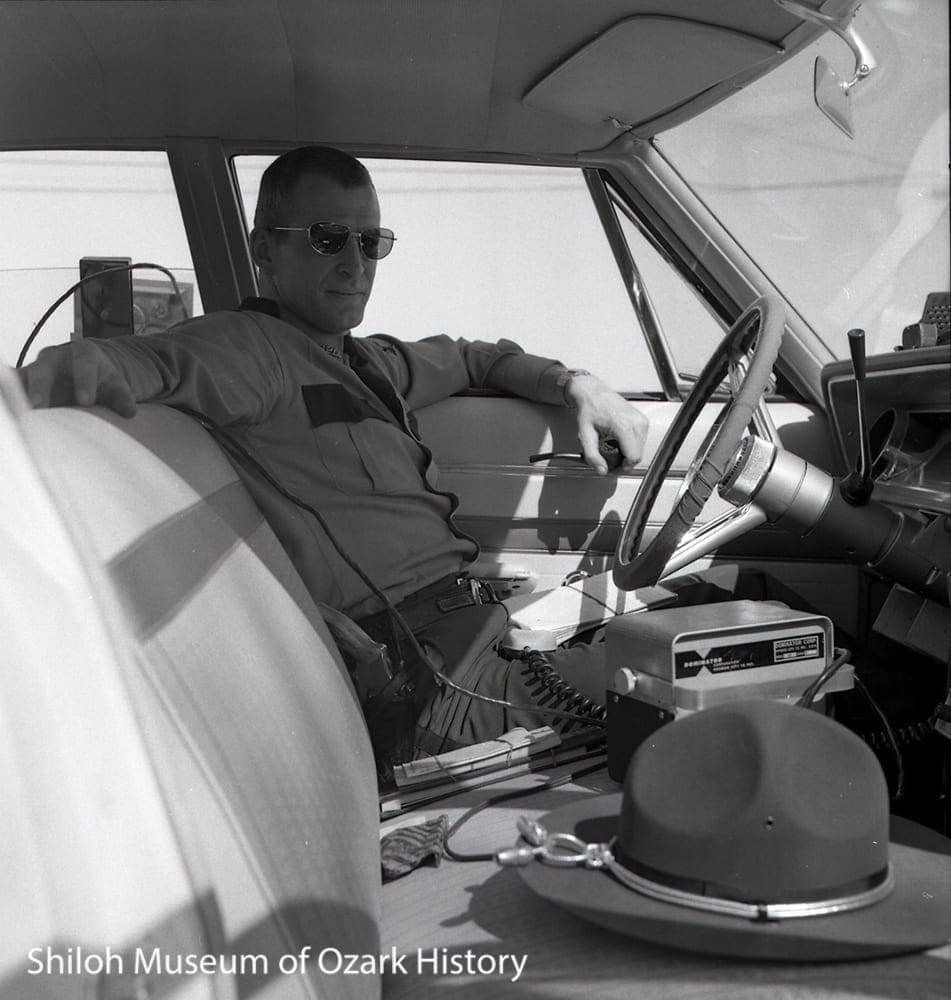
The Springdale Police Department used this Dominator radar unit to catch drivers exceeding the speed limit in the mid-1960s. One officer sat in a squad car with the radar unit, clocking the speed of a vehicle as it passed. When there was a violation, he radioed another officer waiting in a squad car down the road who would then pull the speeding driver over and issue a ticket.
“Radar Will Getcha If You Don’t Watch Out” was the caption for an April 12, 1965, Springdale News photo feature describing the department’s two-man radar operation. One officer (Karl Martens, pictured here) sat in a squad car with the radar unit, clocking speeds of cars as they passed. When there was a violation, he radioed another officer waiting in a car down the road who would then stop and ticket violators. Charles Bickford, photographer/Springdale News Collection
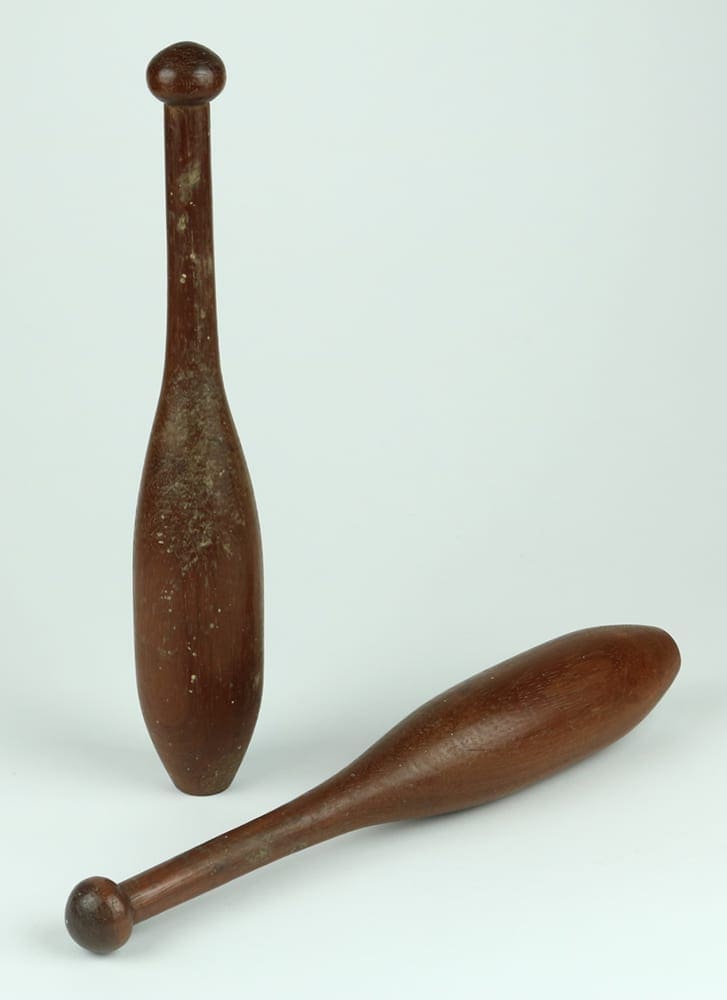
These Indian clubs belonged to Thomas F. Moran (1865-1950). Born to Irish immigrant parents in Worcester, Massachusetts, Moran lived in Fayetteville after he retired as a first lieutenant in the U.S. Army in 1910. He was married to Elizabeth Barbara Schipperus; they had two sons, Thomas and Edward.
In the early 1800s, British soldiers stationed in India were impressed by the fitness of many Indian military personnel. The secret of the Indian soldiers’ excellent physical condition was their use of wooden clubs as part of an athletic training program. Swinging the clubs in a variety of patterns around the body leads to improved upper body strength, muscle tone, and agility.

Illustrations from As Others See Us or, The Rules and Customs of Refined Homes and Polite Society, F. B. Dickerson Co., 1891.
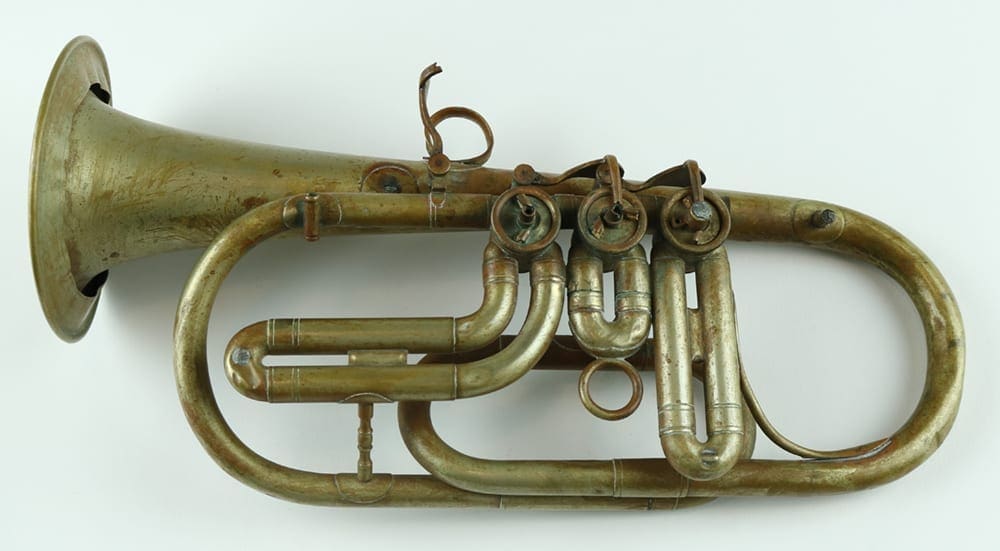
The cornet belonged to Beulah’s father, John Preston Smith (1855-1941), a merchant in Farmington (Washington County) who also played in the town band in the late 1880s. He later owned “The Leader” and “The New Model” clothing stores in Fayetteville.
As it turns out, Prof. Lewis knows Springdale. He lived here in 1951-53, when his father, a Methodist minister serving in the North Arkansas Conference, pastored at the First Methodist Church, located just across the street from the Shiloh Museum! It really is a small world.
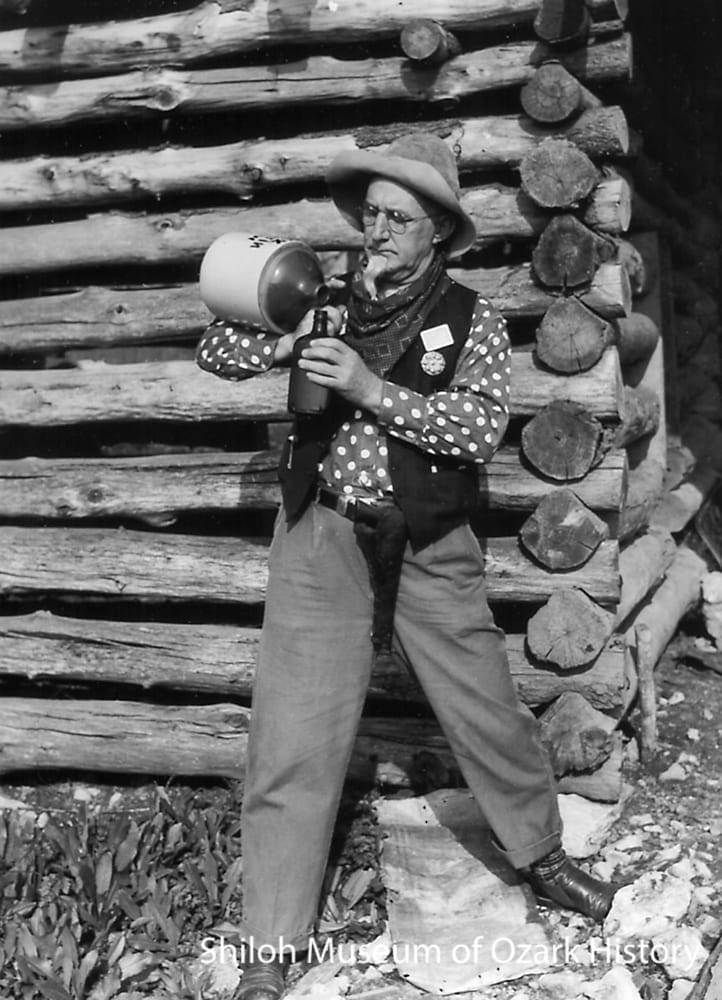
Dupree Deaver as “Pappy,” circa 1950. Howard Clark, photographer/Caroline Price Clark Collection (S-2002-72-1211)
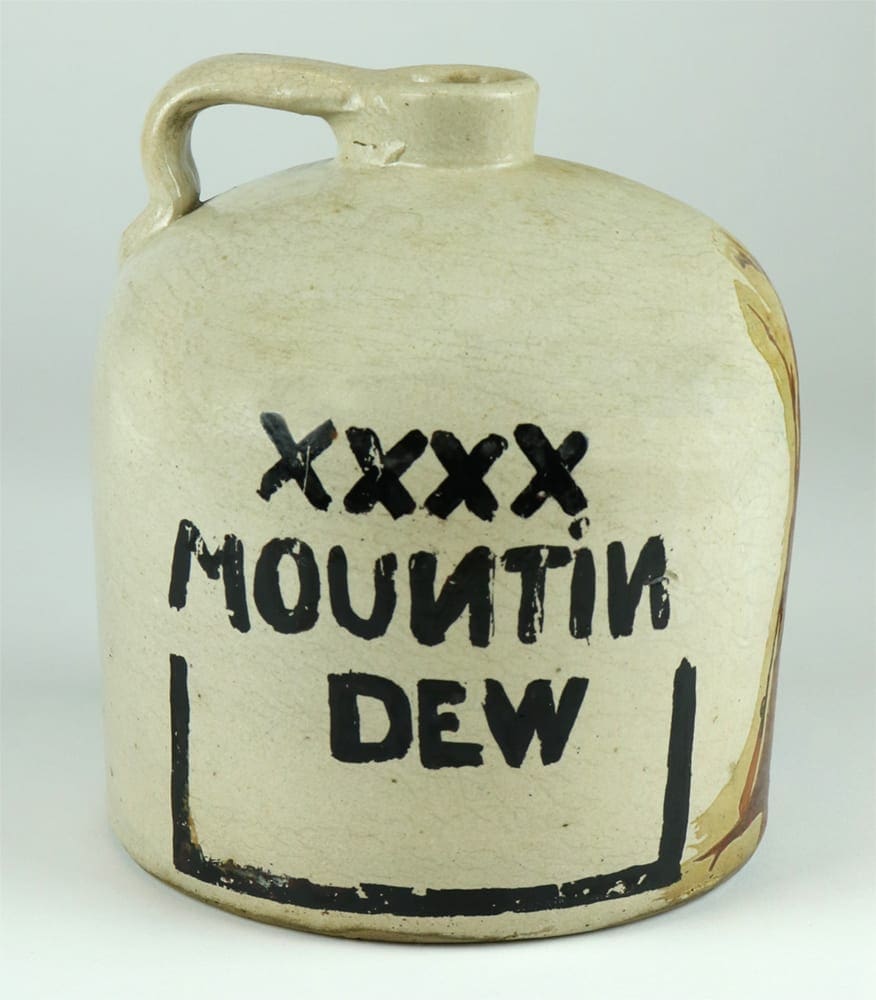
This ceramic jug was used in the 1940s and 1950s by Dupree Deaver, a member of Springdale’s Skunk Hollar Hillbilly Band. Deaver portrayed a moonshine-swilling character named “Pappy.”
The Skunk Hollar Hillbilly Band, which was founded about 1938 by P. W. “Doc” Boone, dressed up in stereotypical hillbilly garb and performed traditional mountain music interspersed with short comedy routines. Along with Boone, the original band members were Austin Cravens, Scott Price, and Virginia Lee Clarkson. All were talented musicians. Boone sang and played harmonica; Cravens, saxophone and jaw harp; Price, guitar; and Clarkson, piano and accordian. They were later joined by Joe Robinson, a left-handed banjo player, and Dupree Deaver, who blew the moonshine jug.
Some others who were part of the band at one time or another were Yvonne Ballew and Mildred Clark, accordian; Harold Graham, Kendle Sigmon, and Ed Terry, guitar; Orville Fields, Dale Sigmon, and Doyle Clark, fiddle; Vera Jean Cummings, piano, and Billy Eden, mandolin. Roger Sanders played a homemade gourd kazoo.
The Skunk Hollar Band became popular throughout the region, as they traveled with a caravan of Springdale citizens who toured the area each year to advertise the Rodeo of the Ozarks. The group eventually disbanded in the late 1960s.

Skunk Hollar Hillbilly Band, 1944. Standing, from left: Scott Price, unidentified. Seated, from left: Joe Robinson, unidentified, Dupree Deaver, Austin Cravens, unidentified, Percy Boone. Howard Clark, photographer/Caroline Price Clark Collection (S-2002-72-1216)
Donated by Martha Brogdon
Historically, grape production in Northwest Arkansas centered in Washington County. While grapes were grown by the first settlers to the region, the crop did not become a major one until residents of the Italian community of Tontitown began setting out vines in 1898.
Grape production in the county took a huge leap forward in the 1920s. Instrumental in this growth was the establishment of a Welch grape processing plant in Springdale. According to an 1937 Springdale News article, in 1920 Welch officials “. . . promised to care for the grape crops from certain Arkansas and Missouri sections and to take all the fruits from places within a 24-hour shipping radius. . .“
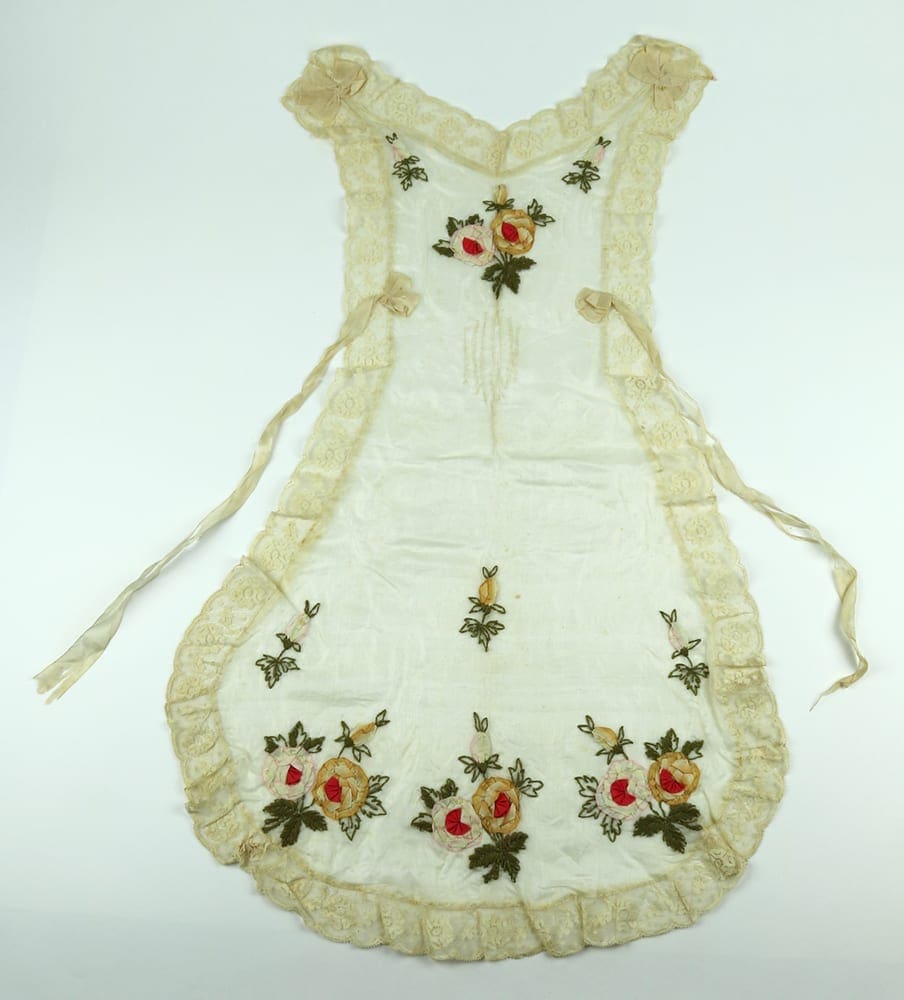
While in Europe as a soldier during World War I, Nathan Bickford sent his wife, Naomi, this apron. Nathan Bickford served with Company G, 9th Infantry Regiment, 2nd Infantry Division during the war. He was awarded a sharpshooters badge, a World War I victory medal and a purple heart with oak leaf clusters for injuries suffered in France.
The Bickfords lived in Missouri, Kansas, and Tennessee before coming to Northwest Arkansas in the 1940s, where Nathan Bickford was an attorney in Gravette and Springdale.